
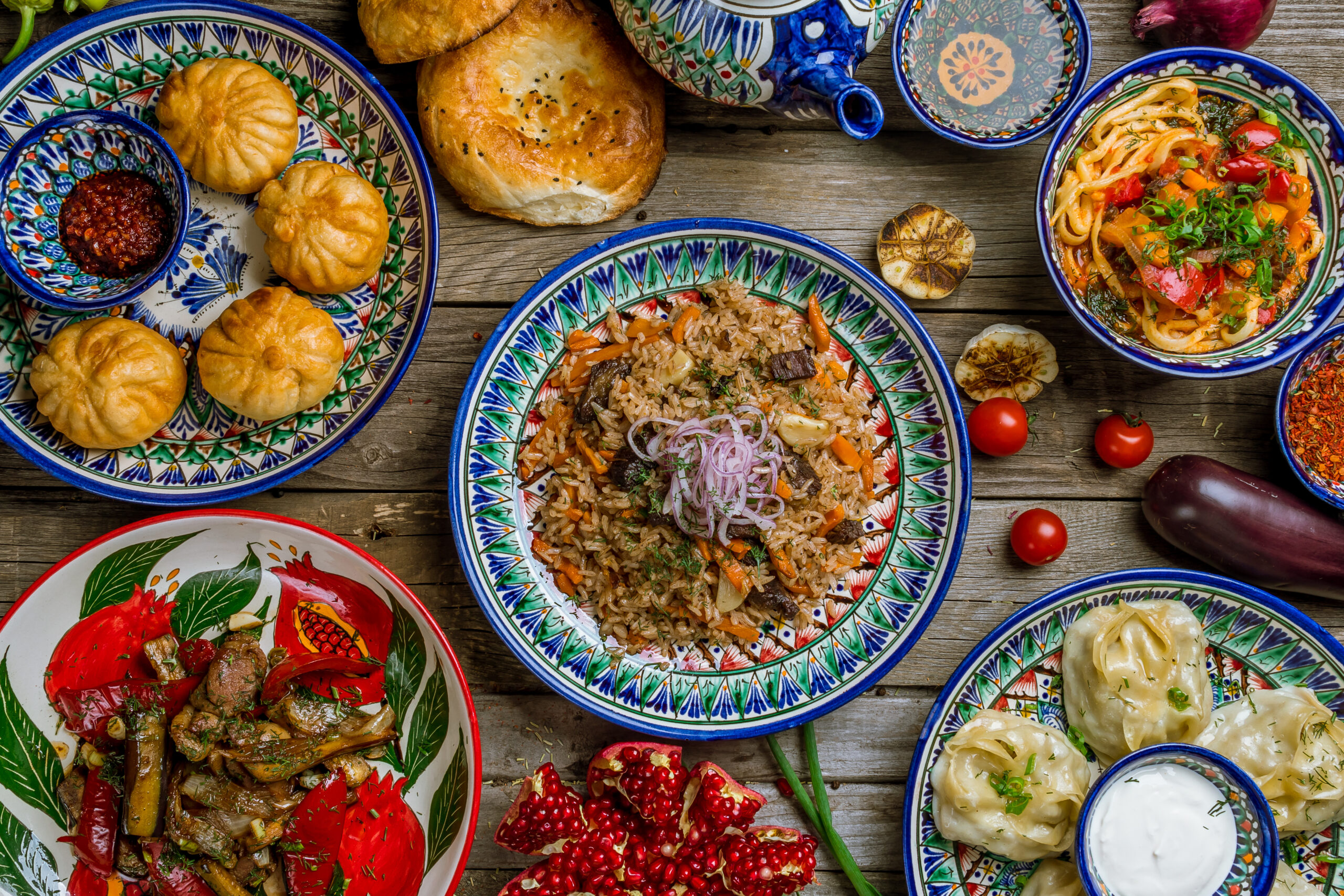
While Plov is undeniably king (and each city fights fiercely over who makes the best version), limiting your Uzbek culinary journey to a single dish is like visiting Italy and only eating pizza.
Uzbekistan’s position at the heart of the ancient Silk Road created a rich regional gastronomic culture influenced by Persian, Turkic, Russian, and Chinese traditions. From emerald-green noodles in the desert oasis of Khiva to underground clay-oven roasts in the southern mountains, every region boasts its own distinct flavors.
If you are planning your 2026 Silk Road adventure, here is the ultimate regional food guide curated by the local experts at Silk Way Tours—and what you should order in every city beyond the standard bowl of plov.
1. Tashkent: Metropolitan Melting Pots & Hearty Street Snacks
As Uzbekistan’s sprawling capital, Tashkent is where ancient nomadic dishes meet urban comfort foods.
Must-Try Dish: Naryn (Norin)
Naryn is a beloved Tashkent specialty that showcases the region’s nomadic heritage. It consists of paper-thin, hand-rolled dough sheets that are boiled, dried, and thinly shredded, then tossed with tender shredded beef or cold horsemeat sausage (Kazy) and heavy black pepper. It is traditionally served cold alongside a steaming bowl of rich meat broth (Shorpa).
Other Tashkent Favorites:
-
Juicy Shashlik: Skewers of spiced ground lamb (Lula), beef, fat, or liver grilled over glowing charcoal embers.
-
Tashkent-Style Plov: Cooked in massive 500-liter iron cauldrons at the Central Asian Plov Center, loaded with quinces, garlic heads, raisins, and horsemeat sausage.
2. Samarkand: Royal Feasts & Slow-Cooked Delicacies
In the ancient capital of Tamerlane, food is treated with royal gravity—focusing on rich meat dishes and ancient, slow-cooked culinary traditions.
Must-Try Dish: Samarkand Jiz (Jiz-Biz)
If you ask a local where to take a true meat lover in the Samarkand region, they’ll direct you to a Jiz-Chana. This dish features generous chunks of tender lamb or beef marinated in wild herbs, slow-rendered in its own fat inside a heavy iron cauldron (kazan), and fried until crispy on the outside and melt-in-your-mouth tender on the inside. It is served steaming hot over sliced raw onions, fresh cilantro, and a splash of vinegar.
The Historic Specialty: Khalisa (Halisa)
For a taste of Samarkand’s deep culinary heritage, order a bowl of Khalisa. This ancient, comfort-food dish is made by slow-simmering high-quality wheat and choice cuts of meat (beef or lamb) for many hours—often overnight—and continuously beating the mixture until the fibers break down into a velvety, porridge-like texture. It is served topped with a rich stew (kaila) of minced meat, chickpeas, and onions, resulting in a hearty, deeply savory dish rich in history.
Other Samarkand Favorites:
-
Layered Samarkand Plov: Unlike Tashkent plov where everything is tossed together, Samarkand plov is cooked and served in distinct layers (rice, yellow carrots, garlic, and tender meat) so you can savor each ingredient’s distinct flavor.
-
Local Wine & Brandy: Samarkand is home to the historic Khovrenko Winery, where Silk Way Tours guests can sample vintage dessert wines and local brandies crafted from sun-drenched valley grapes.
3. Bukhara: Legendary Shashlik & Juicy Olot Samsas
Bukhara’s Persian roots and surrounding towns have produced some of the most celebrated meat and pastry traditions in Central Asia.
Must-Try Dish: Gijduvan Shashlik
Just north of Bukhara lies the town of Gijduvan, famous across the entire country for its world-class shashlik. Made with finely minced, heavily tenderized lamb or beef mixed with local spices and tail fat, these skewers are grilled over glowing embers of fruitwood coals. The result is unmatched juice and flavor that draws foodies from miles away.
The Local Pastry Icon: Olot Samsa (Alat Somsa)
Originating from Bukhara’s Olot district, Olot Samsa is vastly different from standard tandoor pastries. Made with thin, unleavened dough, it is filled with hand-chopped beef or lamb, onions, fresh tomatoes, and spices. Baked in a traditional oven, the tomatoes break down to create a succulent, savory broth inside each pocket.
Other Bukhara Favorites:
-
Osh-i-Sofi: Bukhara’s unique, royal version of plov, cooked in traditional copper kettles (deg). It uses lighter oil, heavily spiced meat, and is delicately sweetened with raisins and dried plums.
4. Khiva (Khorezm): Emerald Noodles & Ancient Silk Road Pasta
Isolated by the red sands of the Kyzylkum Desert, the Khorezm region around Khiva developed a completely unique cuisine that you won’t find anywhere else in Uzbekistan.
Must-Try Dish: Shivit Oshi (Green Dill Noodles)
Perhaps the most eye-catching dish in Central Asia, Shivit Oshi features bright emerald-green hand-pulled noodles infused with fresh local dill. The noodles are served topped with a savory stew of beef, potatoes, peppers, and tomatoes, alongside a side of fresh yogurt (katyk).
Other Khiva Favorites:
-
Tukhum Barak: Unique square ravioli filled with a delicate mixture of raw egg, milk, and spices that seal instantly when dropped into boiling water.
-
Plov-i-Khorezm: A stripped-back, ancient style of plov featuring plain boiled rice, thin strips of beef, and yellow carrots—cooked with minimal spices to let the natural flavors speak.
5. Kashkadarya & Surkhandarya: The Underground Tandir Empire
Heading south toward the ancient mountain passes and desert valleys of Shahrisabz, Karshi, and Termez brings you to the undisputed meat capital of Central Asia. Here, cooking isn’t done over open grills—it happens deep underground.
Must-Try Dish: Tandir Kabob (Tandir Gusht)
Unlike standard skewers cooked over coals, true southern Tandir Kabob is an ancient nomadic technique. Large cuts of young mountain lamb are marinated with salt and wild cumin (zira), wrapped with fresh mountain juniper branches (archa), and lowered into a deep, red-hot clay tandir pit built into the earth.
The oven is sealed tight with mud, trapping the smoke and heat for hours. When opened, the meat is intensely tender, falling off the bone with a subtle, aromatic pine scent from the juniper needles.
Other Southern Favorites:
-
Chiroqchi Jiz: A variation of Jiz from Kashkadarya cooked strictly in natural tail fat until golden and crispy.
-
Surkhandarya Mountain Dairy & Herbs: Fresh mountain cheeses, wild garlic samsas, and herb-infused broths served in rural mountain teahouses (chaykhanas).
6. The Fergana Valley: Noodle Masters & Sweet Treats
The lush, agrarian Fergana Valley in the east is the fruit basket and breadbasket of Uzbekistan.
Must-Try Dish: Hand-Pulled Lagman
Influenced by Uyghur and Chinese culinary traditions, Lagman features thick, chewy, hand-stretched noodles served either in a rich, aromatic meat-and-vegetable broth (Shorpa Lagman) or stir-fried with peppers, garlic, and beef (Boso Lagman).
Other Fergana Favorites:
-
Kokand Halva: A sweet, creamy confection made with milk, sugar, nuts, and chocolate—a popular sweet gift brought home by travelers.
-
Manti: Delicate, steamed wheat dumplings stuffed with spiced pumpkin or minced meat, eaten hot by hand with sour cream.
3 Golden Rules for Dining in Uzbekistan
-
Respect Local Dining Etiquette: Meals in Uzbekistan are social events. Always wait for the host or elder to invite everyone to start eating or offer a blessing (Omin) at the end of the meal.
-
Embrace Tea Culture: Every meal begins and ends with green tea (Kok-Chai) served in a handleless ceramic cup (piala). It balances rich, meat-centric dishes and aids digestion.
-
Eat Plov at Lunch: Plov is traditionally a mid-day meal served fresh between 11:30 AM and 2:00 PM. By dinner time, the best plov spots across the country are usually sold out!
Taste the True Flavors of the Silk Road with Silk Way Tours
Food in Uzbekistan isn’t just sustenance—it is history, art, and the heart of local culture. Navigating local bazaars, finding authentic back-alley chaykhanas, and discovering rare dishes like Khalisa or real Gijduvan shashlik can be tricky on your own.
At Silk Way Tours, we craft immersive culinary itineraries that go beyond standard tourist menus:
-
Hands-On Masterclasses: Learn how to cook traditional Khalisa or southern Tandir Kabob alongside local master chefs (Oshpaz).
-
Curated Food Walks: Explore secret food stalls in Tashkent’s Chorsu Bazaar and Samarkand’s Siab Bazaar with expert local guides.
-
Exclusive Dining: Enjoy private meals inside historical courtyard madrasahs, family homes, and historic wine cellars.
Ready to taste the real Uzbekistan? Contact the team at Silk Way Tours today, and let us design a customized, flavor-packed Silk Road itinerary tailored to your taste buds.

)