
Fill in the form and we will get back to you soon.
Termez
Termez is one of the oldest cities in Central Asia and had its own important place in the formation of ancient Eastern civilization. According to archaeological research results and written sources, it was founded in the 5th century BCE. Since the 3rd century, Termez has been considered a highly developed political, economic, and cultural center of Bactria. Termez played a crucial role as a bridge for the spread of Buddhism to the East—China, Tibet, and Japan. The golden and most prosperous period for Termez was during the reign of the Kushan Empire. The city of Termez lies 310 m above sea level. The population is about 130,000.
Sultan Saodat Complex
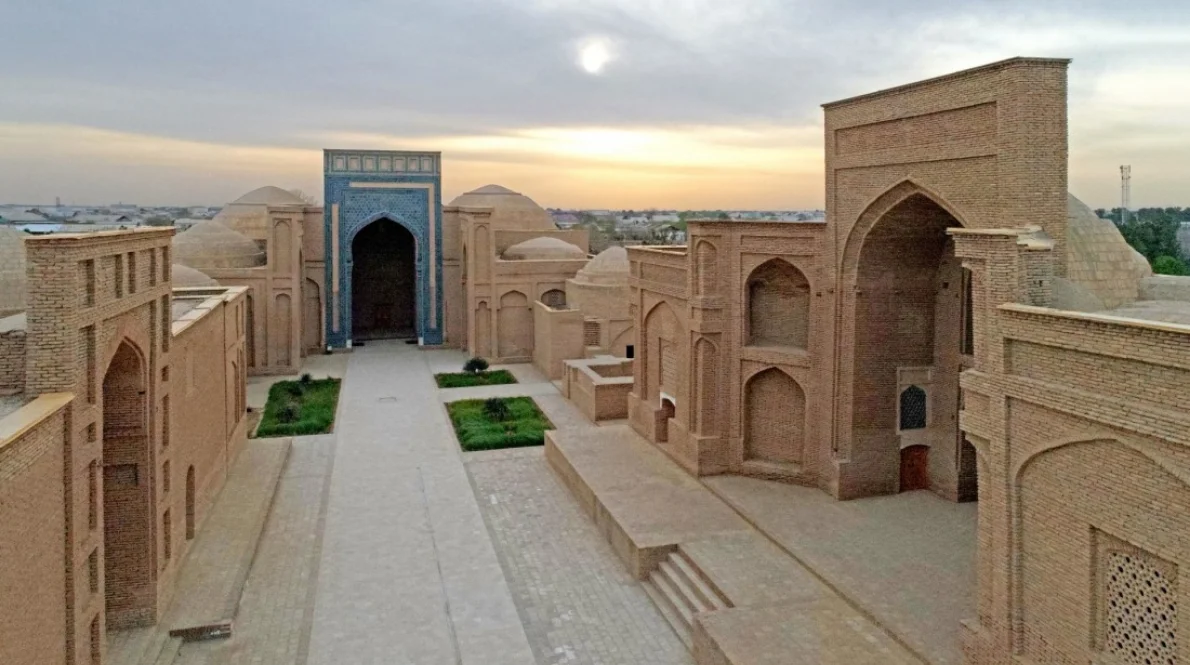 Sultan Saodat, the “Domain of the Sayyids”, is a sacred memorial complex formed from the 12th to the 17th centuries around the family tombs of the Sayyids of Termez. The Sayyids are descendants of the Prophet Muhammad. The complex covers 4 hectares and consists of 143 monuments. The first mausoleum dates to the 11th century and belongs to the founder of the Sayyids of Termez, Hasan al-Emir. The latest construction—the entrance portal that closes the eastern façade—was built in the 17th–18th centuries.
Kirk-Kiz Fortress
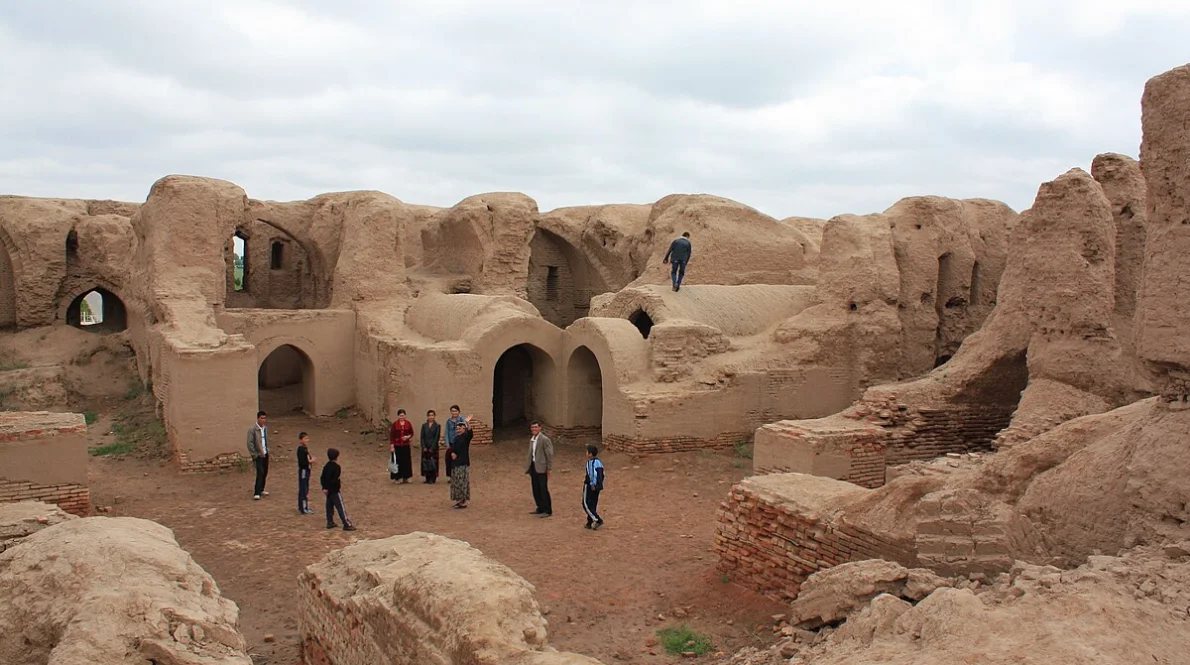 This was the palace of the rulers of Termez. The name Kirk-Kiz means “Forty Maidens”. Its history is closely connected with a legend about an Amazon maiden who once lived in this fortress. Kirk-Kiz is located outside ancient Termez in an area called Shahri-Saman, associated with the Samanid dynasty. It is a fact that the Samanids owned this palace, and it was likely a summer residence of the Samanid state. The structure has a square plan (54 × 54 m) with about 50 rooms. Kirk-Kiz is a kind of “museum building” and an architectural experiment of medieval Central Asia.
Khakim at Termiziy Complex
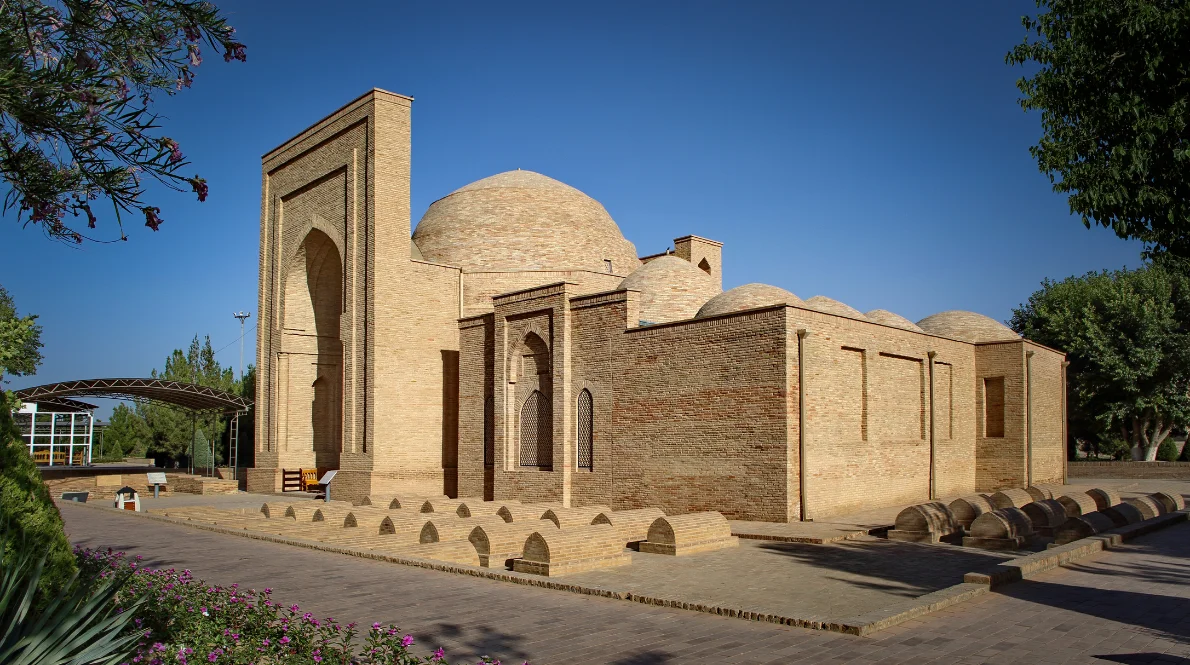 The architectural complex of Khakim at Termiziy is located on the territory of ancient Termez, not far from the kala (fortress), and was formed over many centuries around the grave of Khakim at Termiziy. He was a famous Islamic ascetic and Sufi master who lived in the 9th century, the founder of the “Hakimi” Sufi order. Locals call him Termez Ata (Father of Termez) and honor him as the city’s patron. His full name is Abu Abdullah Muhammad Ali bin Husen al-Khakim Termiziy, which means “the Wise Man of Termez”. The mausoleum was built in 1389–1390. At the end of the 14th century, after Temur’s conquest, the tomb of Khakim at Termiziy was covered with white marble—an outstanding masterpiece of stone carving in Central Asia. At the beginning of the 15th century, during the reign of Temur’s grandson known as Khalil Sultan, he ordered the construction of an additional khanqah for dervishes.
Kara Tepa
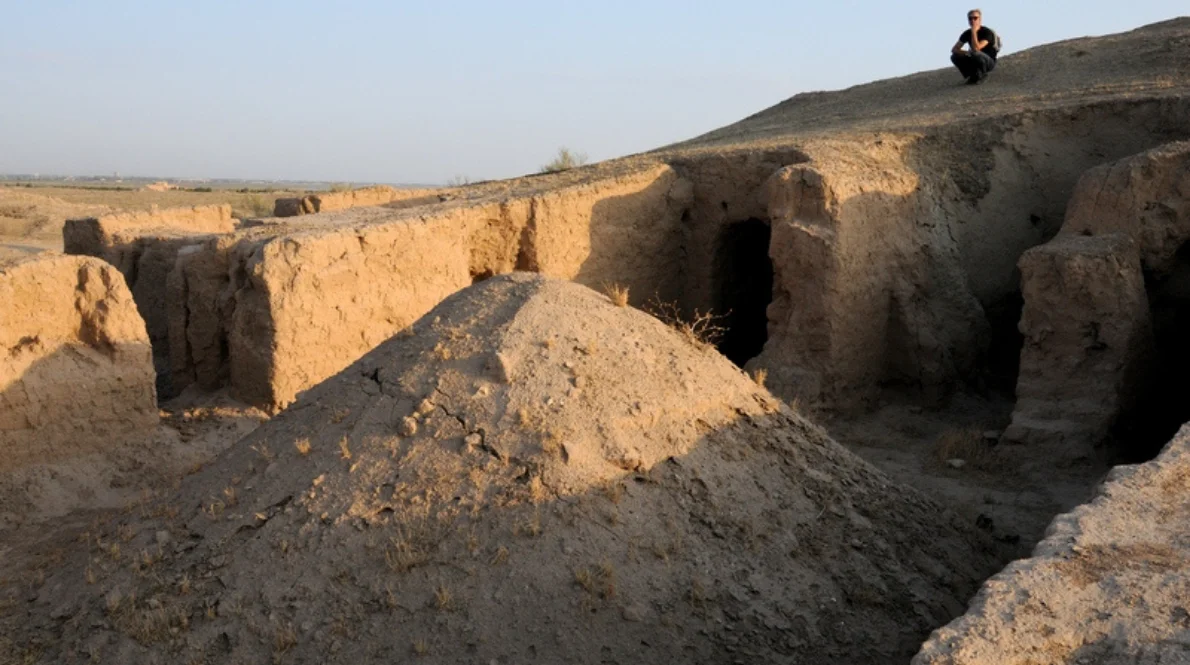 Termez served as a bridge for the spread of Buddhism in East Asia. Travelers can find the ruins of a Buddhist center here. One of them is called Kara Tepa, meaning “Black Hill”. Kara Tepa was used by Buddhists as a monastery. Archaeological excavations show that the monastery was built in the 2nd century. Niches once held statues of the Buddha and bodhisattvas. Archaeologists also found fragments of paintings with the very distinctive profile of an ascetic—an arhat—turned toward the Buddha.
Fayaz Tepa
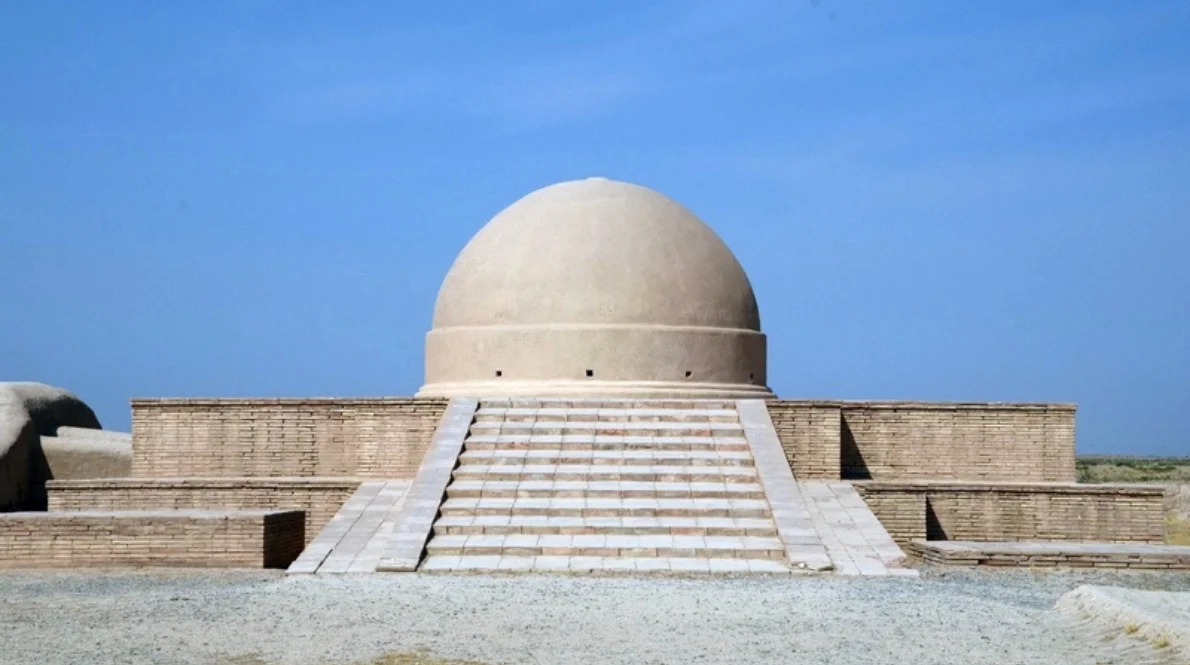 Another Buddhist monastery was named Fayaz Tepa by archaeologists. It was built in the 2nd century, then unexpectedly abandoned and destroyed in the 3rd century. In the 5th century it was used as a burial site for the Hephthalite dynasty. The monument belongs to the Kushan Empire and is a fine example of Kushan–Bactrian architecture, sculpture, and mural painting. After the decline of the Kushan Empire, Buddhism lost popularity and the monastery was already empty by the 5th century. After that, the site was used as a cemetery. Possibly, one of the rooms later served as a Christian monastery.
Zurmala
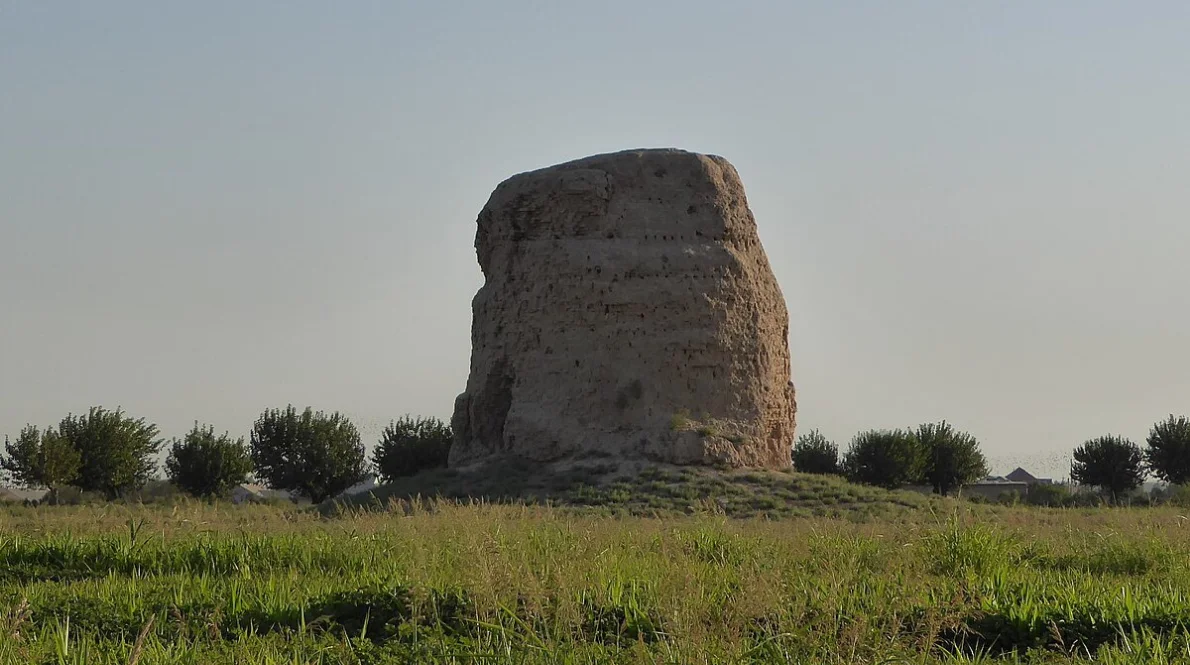 The Zurmala stupa was once part of a huge Buddhist complex, but in the Middle Ages the area was already used as farmland. Only the main structure—the massive stupa, stripped of its décor—survived through the centuries. Today it is an almost shapeless mass. The stupa’s diameter is 14.5 m and its height is 16 m. The construction of Zurmala belongs to the Great Kushan Empire, and its scale proves the importance of this building in the Buddhist architecture of Termez.