
Fill in the form and we will get back to you soon.
Shakhrisabz
Shakhrisabz, the “Green City”, was founded in the 7th century. Throughout its long history, the city changed its name many times. Shakhrisabz was known as “Gava Sugda” (City of the Sogdians), “Nautaka” (New City), and “Kesh” (Joyful Soul). During the rule of Amir Temur and Ulugbek (14th–15th centuries), the city experienced its golden age and received its current name; in that period it was also called “Kubbat ul ilm va Adab” (The Dome of Knowledge). The city lies 658 m above sea level. The population is about 90,000 people.
Ak-Saray Palace
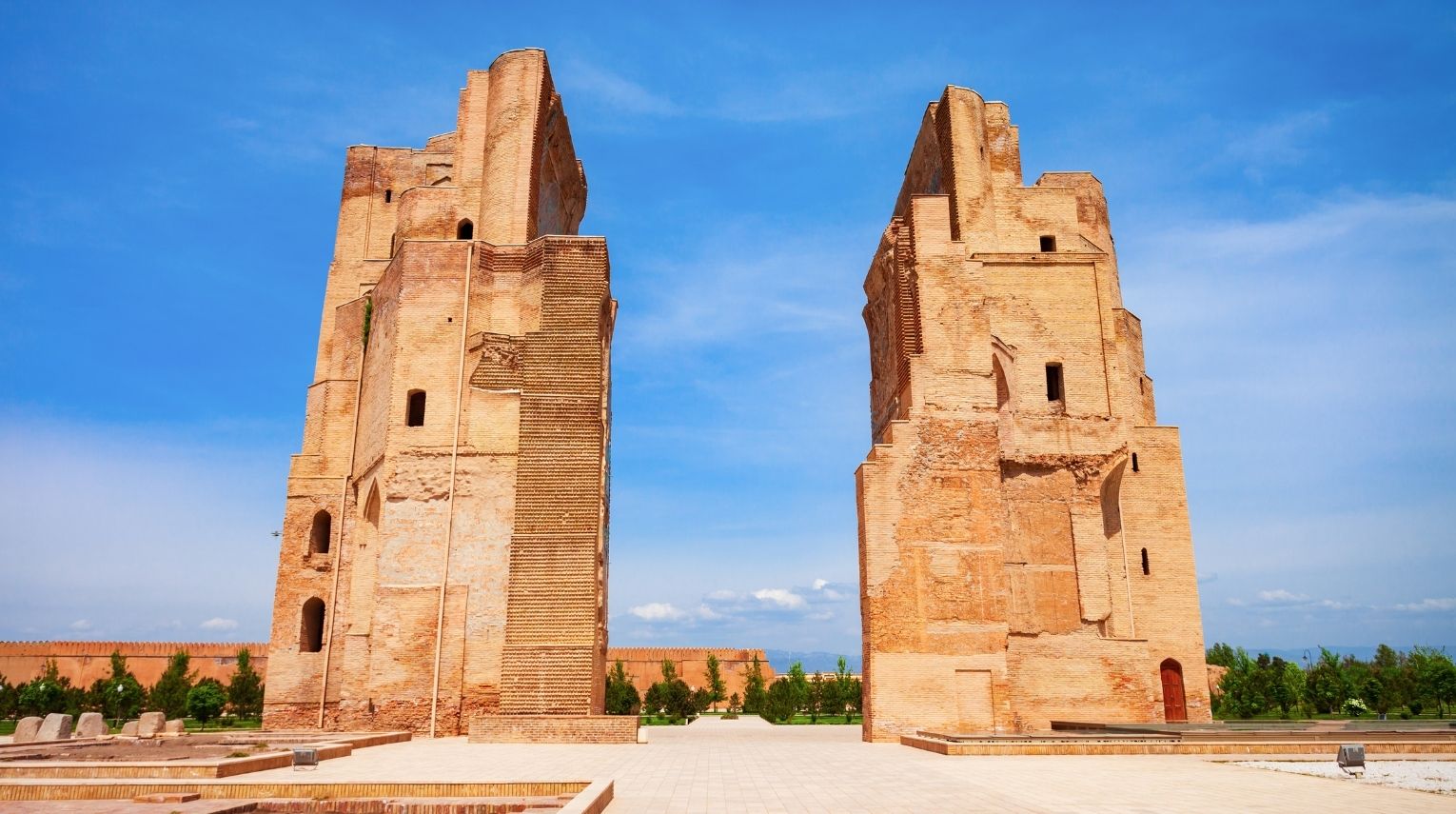 In the north-eastern part of Shakhrisabz there was a palace complex that included the territory of the Ak-Saray Palace (the White Palace) and a well-planned garden. Today we can see only the ruins of the entrance area. The palace was built between 1380 and 1404. After it was completed, Temur brought his throne to Shakhrisabz. The surviving ruins reach up to 38 m in height, but the original height could have been twice as much. This magnificent pearl of the Temurid period was destroyed in the 16th century by the Uzbek ruler Abdullah Khan, who wanted to erase all traces of the Temurid dynasty that controlled almost the entire Silk Road territory, uniting East and West.
Dorus Saodat
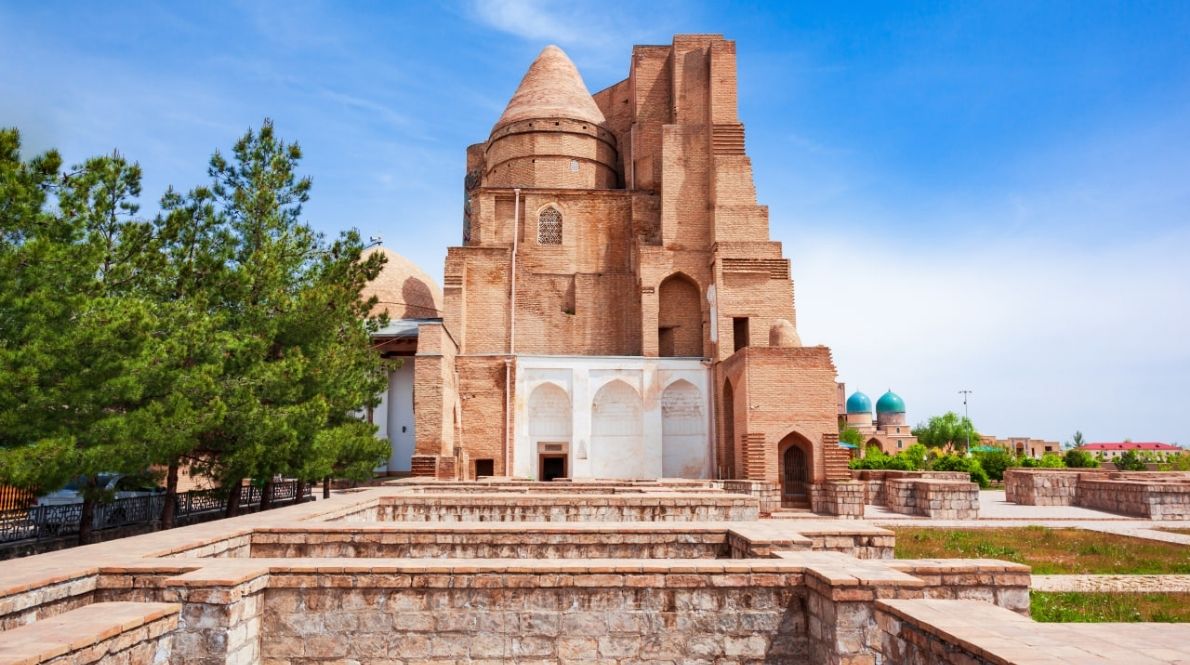 Dorus Saodat, the “Center of Power and Strength”, was built between 1380 and 1404. It consists of the mausoleum of Jahangir, the mausoleum of Temur, and the Hazrati Imam Mosque. The mausoleum of Jahangir is a building covered with a conical dome. It was built in honor of Temur’s eldest son, who died very young at the age of 20. Temur’s second son, Omar Shayx, was also buried here in 1394. Travelers can find architectural parallels to this complex in southern Kazakhstan, in Turkestan, around the famous Sufi mausoleum of Ahmad Yassaviy, founder of the Yassaviya Sufi order, which was also built by order of Temur. Temur’s tomb here is also one of the most splendid crypts in Central Asian architecture, but it is empty because he is buried in Samarkand.
Dorut Tilovat
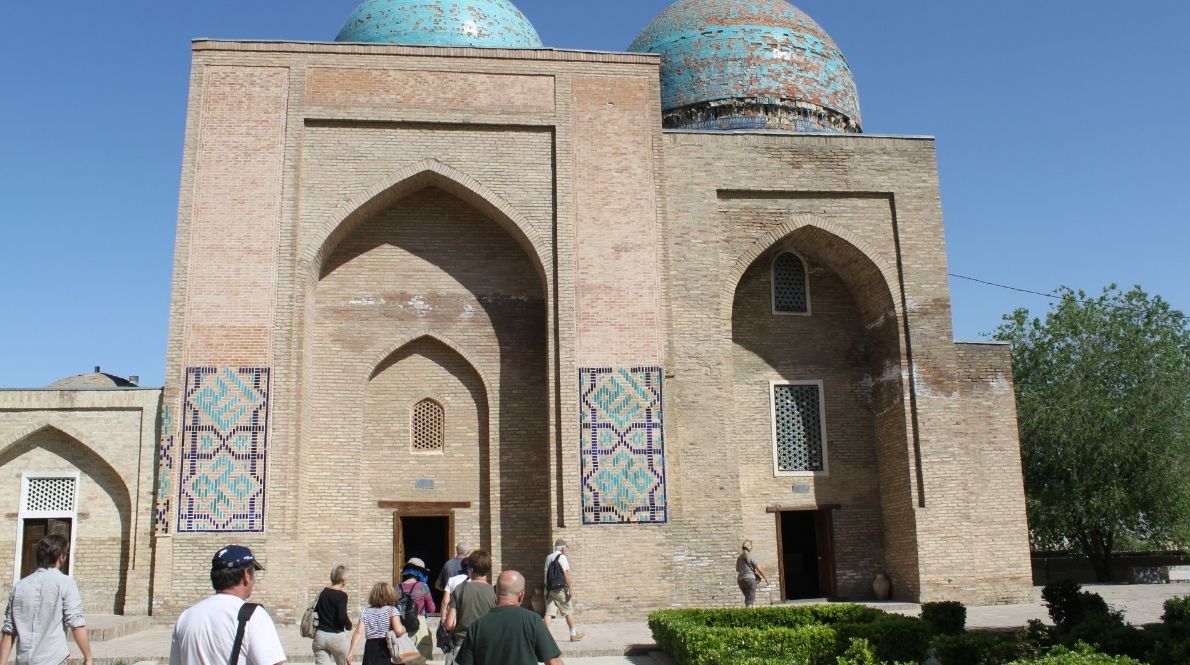 Dorut Tilovat (Center of Reflection and Contemplation) is also a monument of the Temurid era. It includes the mausoleum of Sheikh Shamsiddin Kulol, Ulugbek’s Friday Mosque, and the Gumbazi Saidon mausoleum. The formation of this complex is closely connected with the name of the famous Sufi master Sheikh Shamsiddin Kulol. He held a high position in the Temurid dynasty and was the spiritual teacher of Temur and Temur’s father, Amir Taragay. Amir Kulol received the title “PIR” (spiritual teacher for Sufis) in the southern region. He died in 1370–1371 and was buried in this complex. The Friday Mosque Kuk Gumbaz (“Blue Dome”) was built by order of Ulugbek. In 1437, Ulugbek built next to the mausoleum of Sheikh Shamsiddin Kulol a mausoleum for the Sayyids, considered descendants of the Prophet Muhammad. Therefore, this mausoleum was named Gumbazi Saidon (Dome of the Sayyids). In the nearby town of Kitab, other famous Sufis—Darwish Muhammad as-Samarkandiy and his son Xodji al-Amkanaki—were buried; they were the 21st and 22nd representatives of the Naqshbandiya “silsila” chain.
Katta Langar
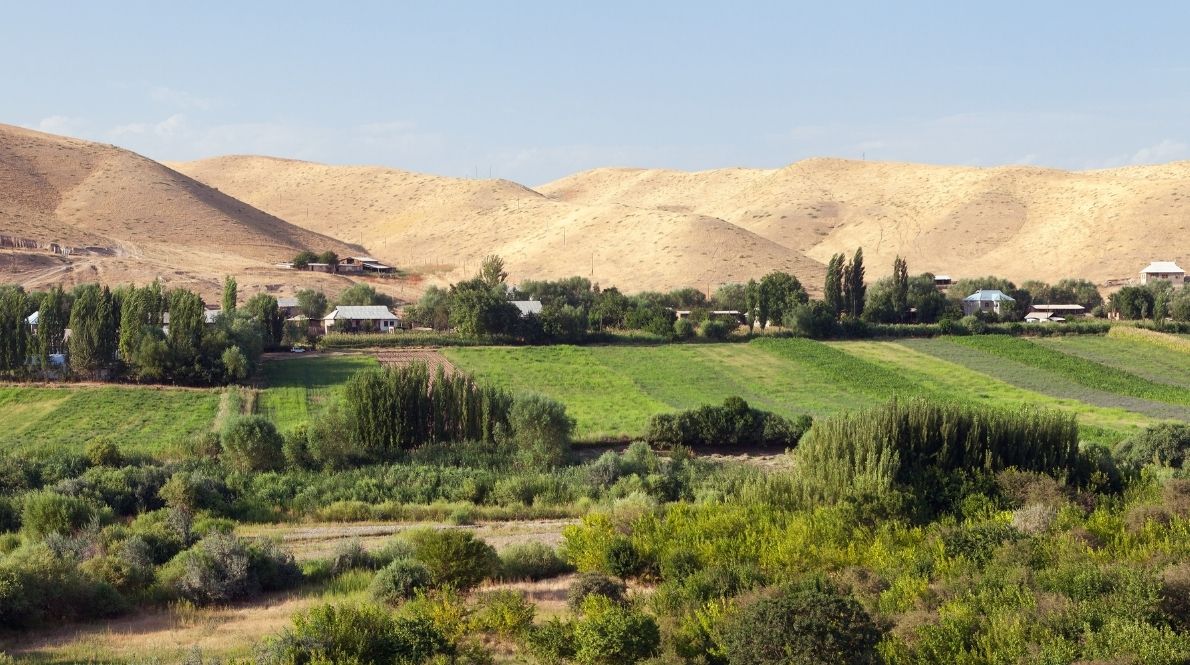 70 km from the city of Shakhrisabz there is a unique complex called Katta Langar, meaning “Great Anchor”. Here, about five hundred years ago, the ISHKIYA Sufi brotherhood was founded. The ISHKIYA brotherhood (ISHK means “love of God”), a branch of the famous TAYFURIYA Sufi brotherhood, took its name in the 8th century from the well-known founder Mekki Baba Ishki. There is a mosque here. It was built in 1515 by order of the Sufi master Muhammad Siddik, head of the ISHKIYA Sufi order. Not far from the mosque there is a family crypt of the ISHKIYA sheikhs, made in an ascetic style. In the crypt are buried the founder of the Katta Langar lodge Sheikhzade Muhammad Siddik, his father Sheikhzade Abul Xasan II, and his son Abul Xuseyn Axund.