
Fill in the form and we will get back to you soon.
Samarkand
Samarkand is one of the most beautiful and oldest cities in the world; it was founded in the 7th century. The name “Samarkand” means in Sanskrit “crossroads of trade routes.” Samarkand is the golden cradle of worldly civilization, a trading bridge between East and West on the Silk Road, and it was a center of commercial relations, science, ancient traditions, and diverse cultures.
The city lies 724 meters above sea level. The population is about 500,000 people.
Gur-e Amir Mausoleum
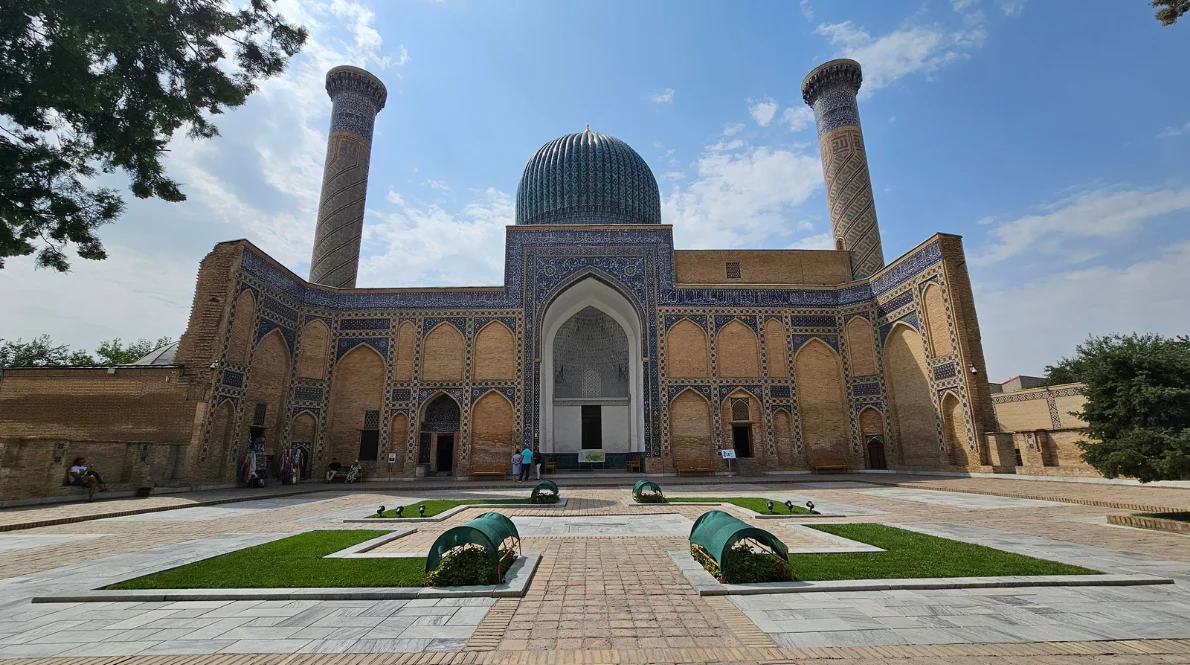 The Gur-e Amir Mausoleum (“Tomb of the Emir”) was built in 1403 in honor of Amir Temur’s beloved grandson, Muhammad Sultan. It became the dynastic tomb for the Timurids. Beneath the blue, 64-ribbed dome are the graves of Temur, his third son Miranshah, his fourth son Shokhruh, his grandson Muhammad Sultan, Ulugbek, his spiritual mentor Mir Said Baraka, and later Said Omar was also buried there. The interior was decorated with papier-mâché. Around the mausoleum you can see the ruins of the former madrasa and the khanqah for dervishes. The entrance area was later built in 1422 by Ulugbek.
Registan
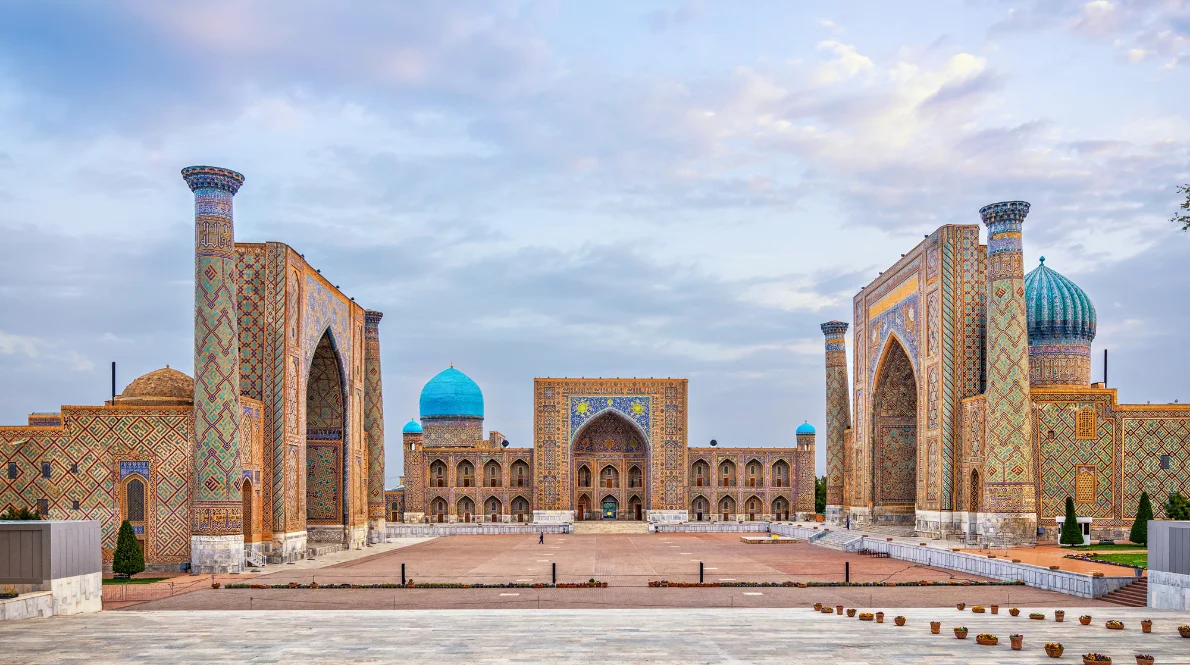 Registan (“Sandy Square”) is the most important cultural center and the calling card of Samarkand. This architectural complex consists of three impressive buildings. The Ulugbek Madrasa was built from 1417 to 1420 and represented a renaissance for the Asian academy of Central Asia. The Sher-Dor Madrasa (“With Tigers/Lions”) (built 1619–1636) was constructed by order of the ruler Bahadur Yalangtush. The entrance of this madrasa amazes every visitor with its decoration. The exterior ornament shows a tiger chasing a doe—an unusual motif for Islamic architecture. The third building is Tilla-Kori (“Covered with Gold”), also built by order of Bahadur Yalangtush in 1646–1660. It combines a madrasa with a mosque inside. The interior of the mosque was gilded and the so-called Kundal style was used, which is unique in all of Uzbekistan. In another corner of this madrasa is the family tomb of the Shaybanid dynasty (16th century), the first Uzbek dynasty that ruled in Samarkand. A well-known festival called “Oriental Music” takes place here at Registan Square.
Bibi-Khanym Mosque
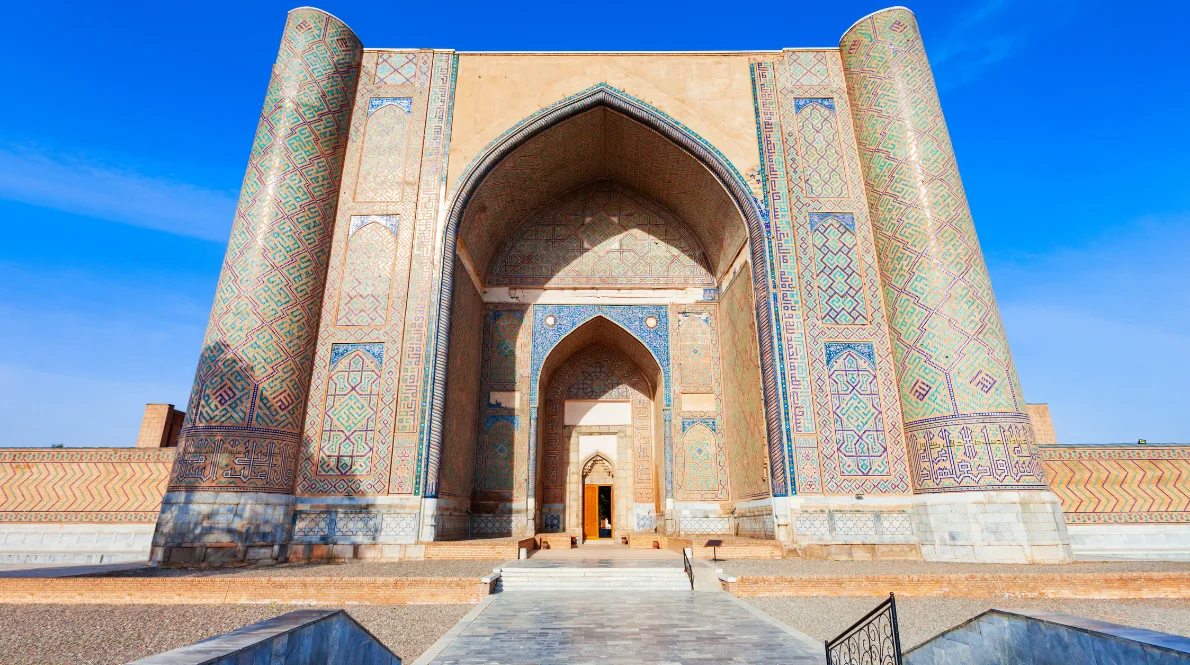 The Bibi-Khanym Mosque is one of the largest historical mosques in Central Asia. It was built for Temur’s favorite wife, Saray Mulk Khanum. Construction lasted from 1399 to 1404. This huge mosque could accommodate 12,000 people every Friday. Today we can see only four preserved parts: the entrance portal, two side mosques, and the main part, the Kuk Gumbaz (“blue dome”). In the middle of the courtyard stands the Lavh (Qur’an stand), a marble stone brought by Ulugbek from Mongolia. On the Qur’an stone you can see long-preserved ancient inscriptions of the Holy Qur’an. Temur’s favorite wife was buried in a mausoleum in front of the entrance portal together with other women of the Timurid dynasty.
Shah-i-Zinda Necropolis
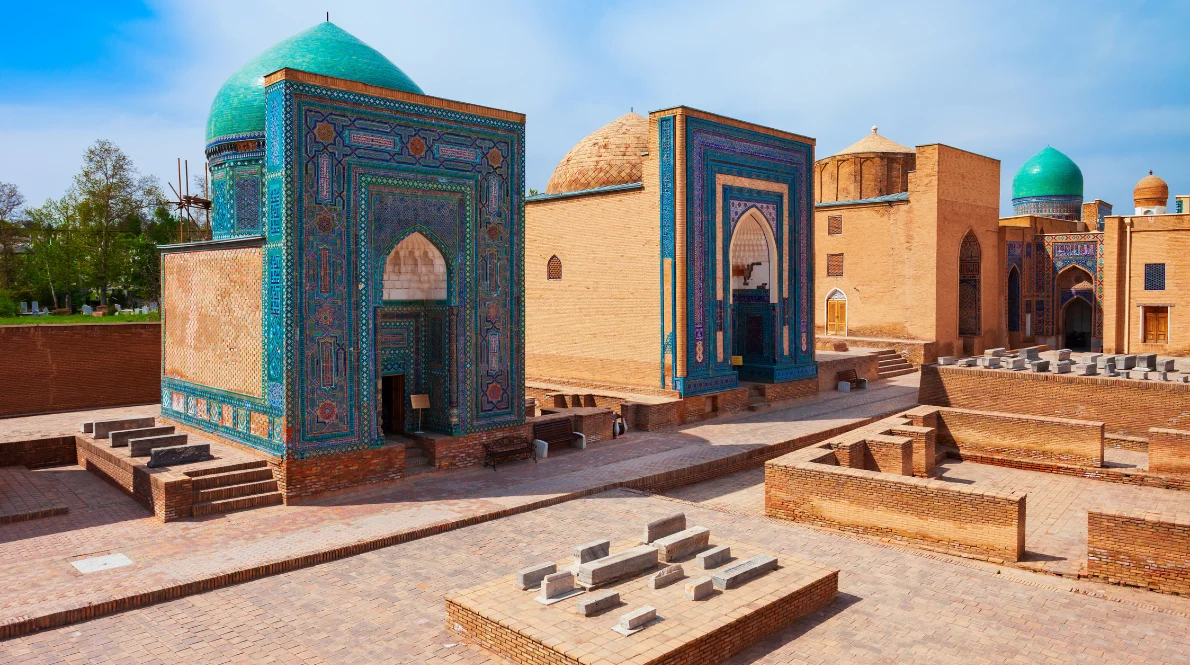 The Shah-i-Zinda necropolis is one of the most important religious centers in Samarkand. The history of this place is closely connected with Qusam Ibn Abbas, a cousin of the Prophet Muhammad. He spread Islam throughout Central Asia, but he was killed and buried in this architectural complex. The complex was built from the 11th century to the beginning of the 20th century. This necropolis is a true museum and a masterpiece of majolica and mosaic decoration. You can admire the beautifully designed mausoleums of Shirin-Beka and Shodi Mulk Oqa, a well-composed double-domed mausoleum, the distinctive majolica art in the mausoleum of Usta Ali Nasafi, and the original wooden door of the mausoleum of Qusam Ibn Abbas, bearing inscriptions: “Our appearance and character are similar to Qusam Ibn Abbas” and “God, please do not forget the disabled and the poor.”
Ulugbek Observatory
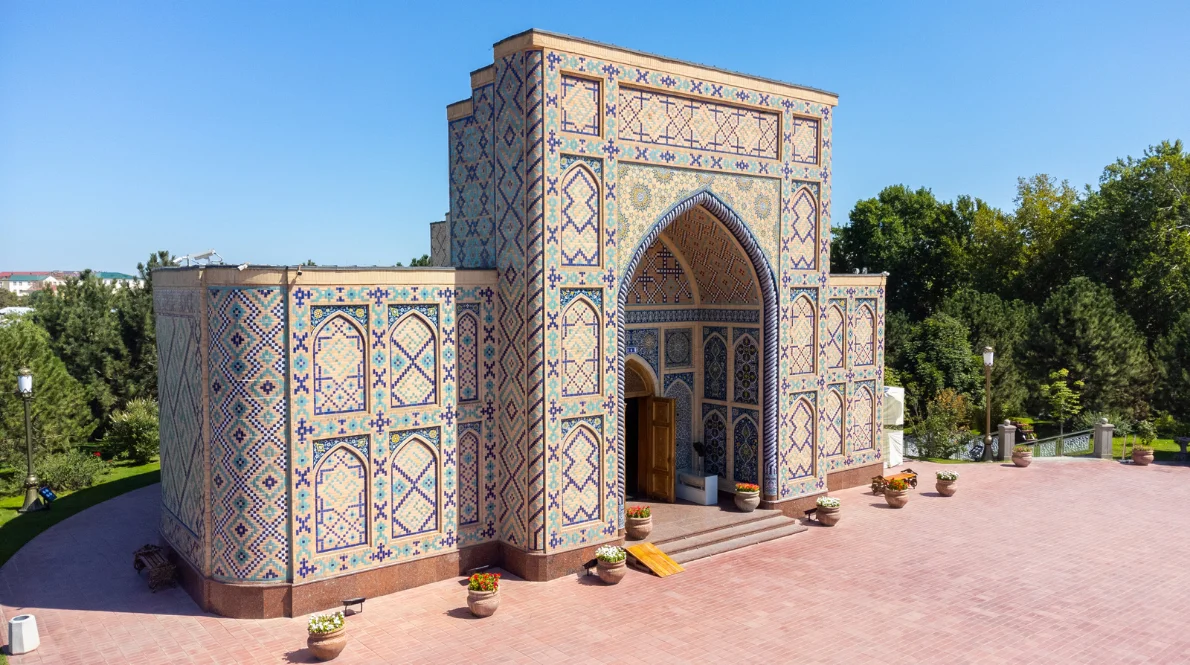 Samarkand was considered one of the most important centers of astronomical science. Ulugbek, Temur’s grandson, was 15 years old when he became ruler, and he built this observatory. Construction lasted from 1424 to 1429. At first, the building was round and had three stories. Today we can see only the underground parts of the observatory, where the sextant is located. The sextant was built by the famous mathematician of his time, Giyosiddin Jamshid. Since the beginning of the 20th century the observatory had been lost and nobody knew where it was. Only in 1908 did the Russian archaeologist V. Vyatkin find it. The construction over the sextant was reconstructed by the Russian engineer Lebedev. Ulugbek’s main work, “Zij-i Jadid-i Kuragani” (the star tables of Kuragani), was translated into various languages and played an important role in the development of astronomy worldwide.
Hazrat Khizr Mosque
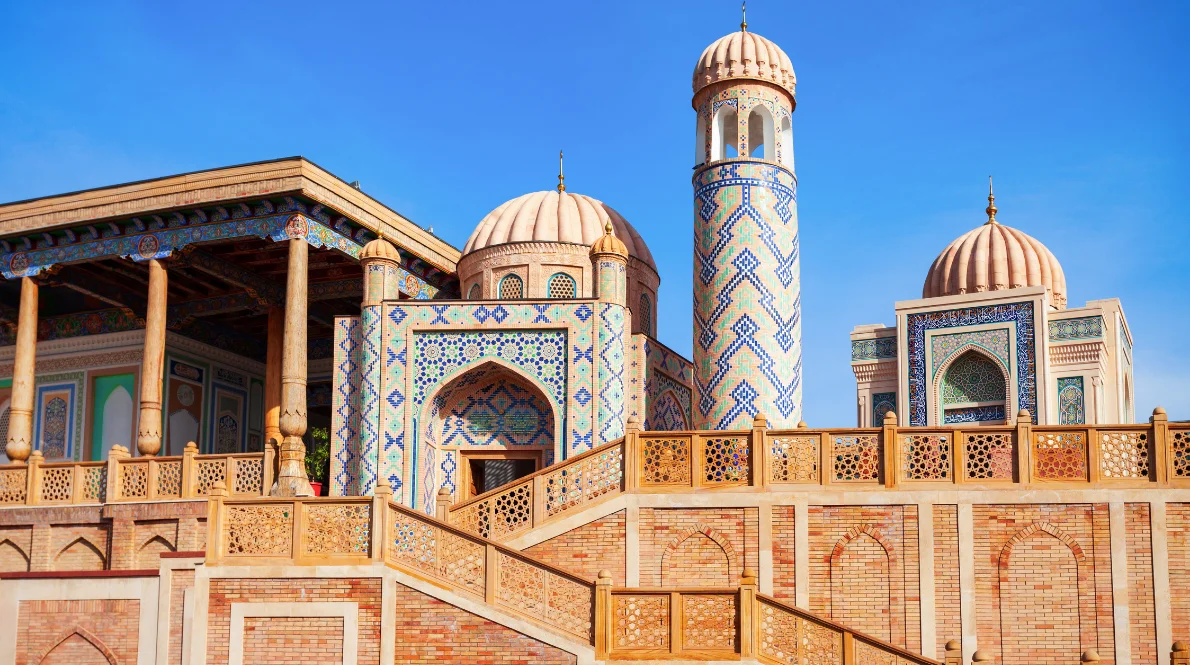 Hazrat Khizr is considered the patron saint of travelers. The foundation of this mosque dates back to the 11th century. In fact, the current building was erected on this foundation in the 19th century. An important architectural feature of this mosque is its wooden ceiling and bright colors. From the ayvan terrace of this mosque you can enjoy a beautiful view of old Samarkand.
Mausoleum of Saint Daniel
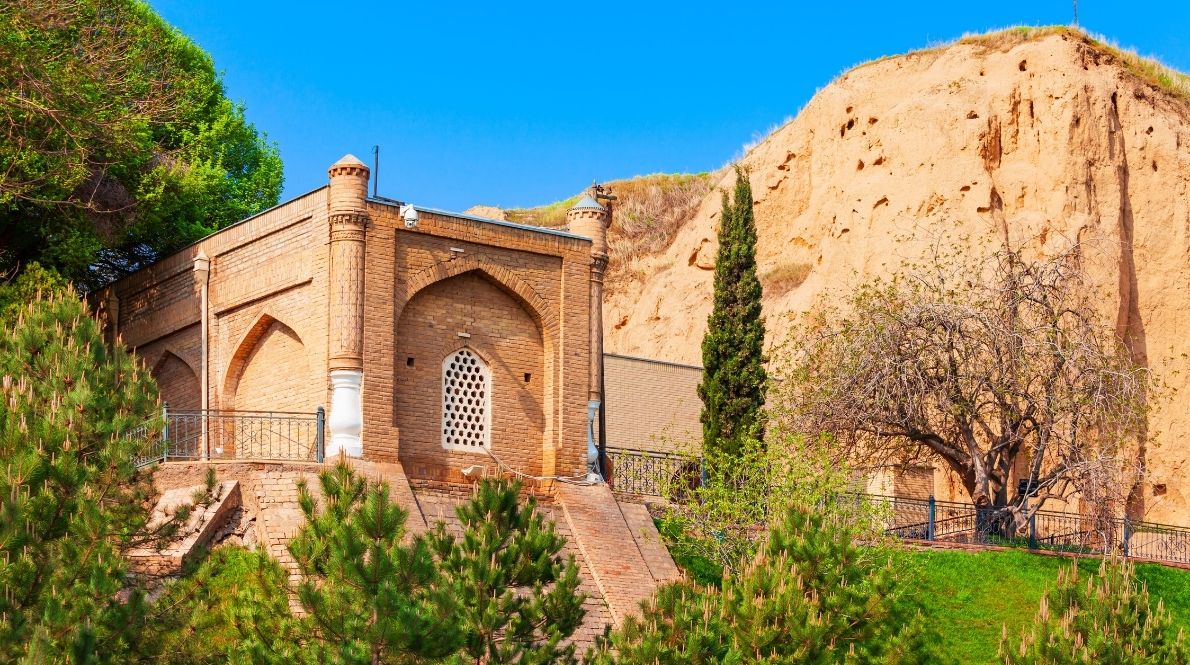 Locals call him Khodja Doniyor. This biblical prophet lived in Babylon, in the territory of present-day Iraq. He is known in history for the pit full of lions. When Temur conquered the Near East, he ordered the tomb of Saint Daniel to be brought to Samarkand. However, this story remains mysterious. The mausoleum was built on the Afrasiyab hill. Inside the mausoleum there is an 18-meter-long grave of Saint Daniel. Next to the mausoleum is a pistachio tree that is 500 years old.
Afrasiyab
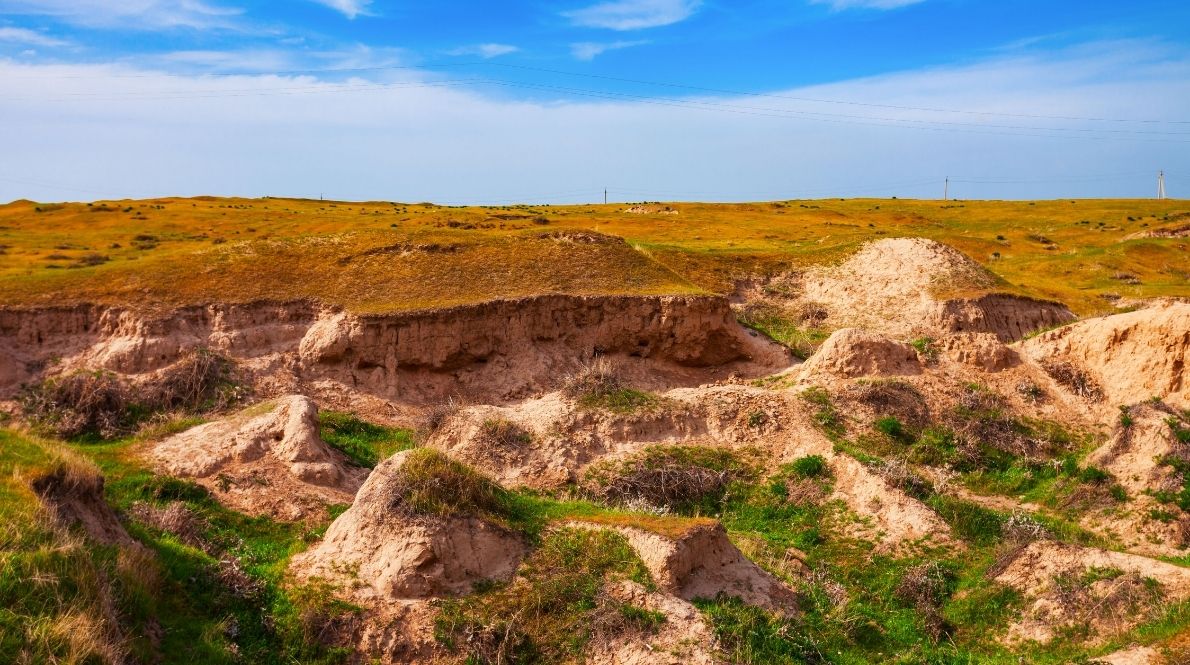 Afrasiyab (“on the bank of the Siyab”) is the old name of Samarkand. The territory of this city was 219 hectares. Samarkand was founded in the 7th century. The city had more than 200,000 inhabitants and was the most important trade center on the Silk Road route between North and South. But like other flourishing lands, it was destroyed in the 13th century by the cruel Genghis Khan. During archaeological excavations, wall frescoes from the 7th century connected to the Zoroastrian religion were found. They are currently displayed in the museum. Since the 1960s it has been opened under the name Afrasiyab. You can also find ceramic ossuaries (urns) where fire-worshippers kept the bones of the deceased.