
Fill in the form and we will get back to you soon.
Khiva
Archaeological excavations show that the origins of Khiva date back to the V century CE. Located on the Silk Road, this mysterious city was one of the key centers of ancient Khorezm.
According to legend, the city was built with the help of the Zoroastrian goddess Ardaxiva, who came down to Earth out of love for a mortal and founded Khiva for humanity. Another legend links the name to “Arda Khiva,” or to Sem, the son of the Prophet Noah, who found a well here in the middle of the desert. Since 1967, Khiva has been protected as a UNESCO heritage site, like an <open-air museum>. The city lies 91 m above sea level and has more than 60,000 residents.
The Monument of Al-Khorezm (Algaritmus)
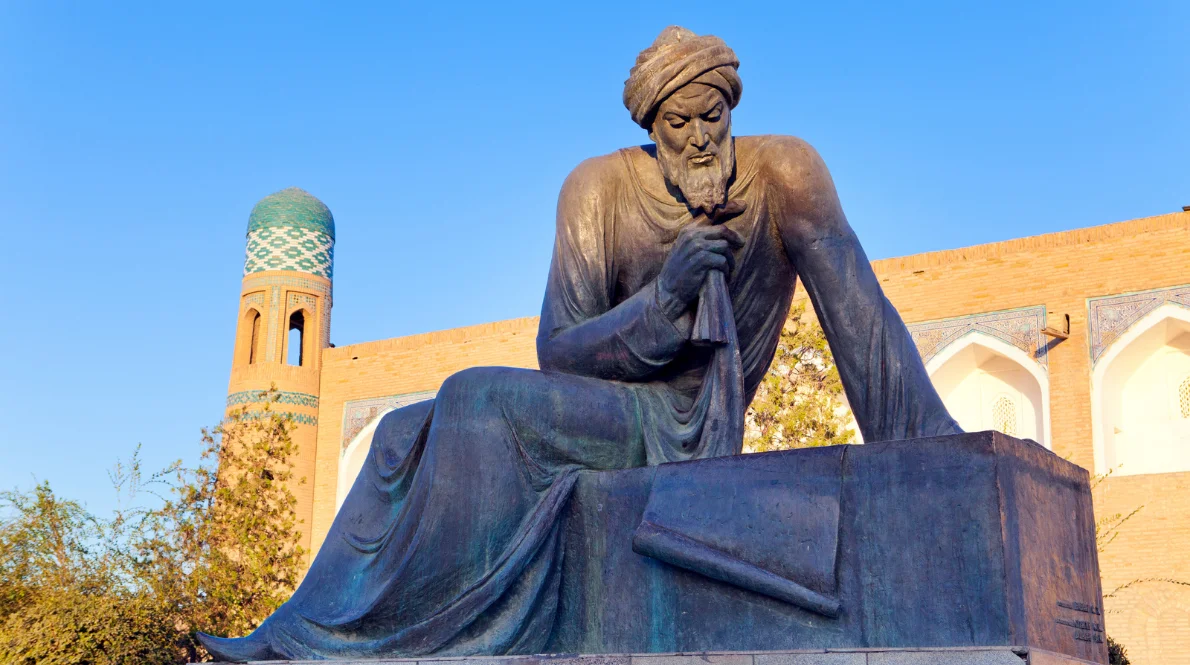
Abu Abdullah Muhammad ibn Musa al-Khorezmi was born in 783 in Khiva, in one of the greatest cultural centers of Khorezm, into a Zoroastrian family. His bronze monument stands near the main gate of Khiva, Ata–Darvaza. He wrote influential works on mathematics, geometry, astronomy, geography, and more; about 20 works have survived. His famous <Al-Kitob al Muxtasar fi xisab al-Jabr al-Muqabala> gave the world the term <<Algebra>> and later spread in Europe under the name <<Algorithms>>.
Ichan – Kala
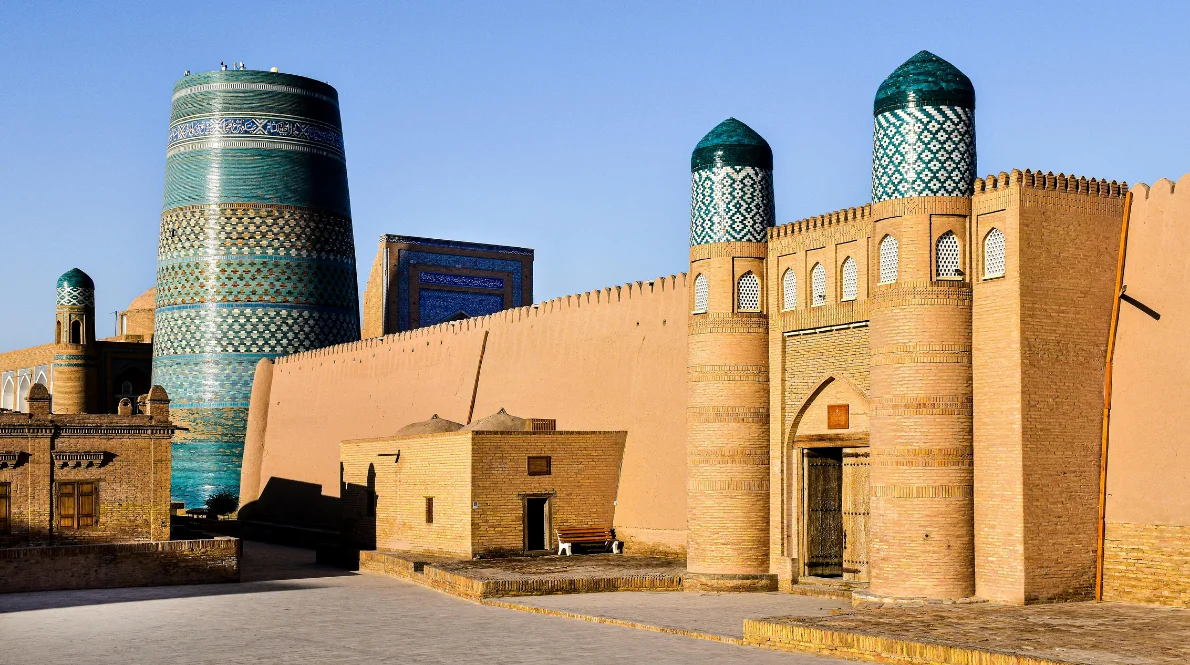
In the 19th century, the city expanded into two parts: Ichan-Kala (inner city) and Dishan-Kala (outer city). Ichan-Kala is surrounded by massive clay walls and has four gates: Ata Darvaza, Palvan Darvaza, Tash Darvaza, and Bagcha Darvaza. Today it is a true open-air museum with an extraordinary historical legacy.
Muhammad Amin Khan Madrasah
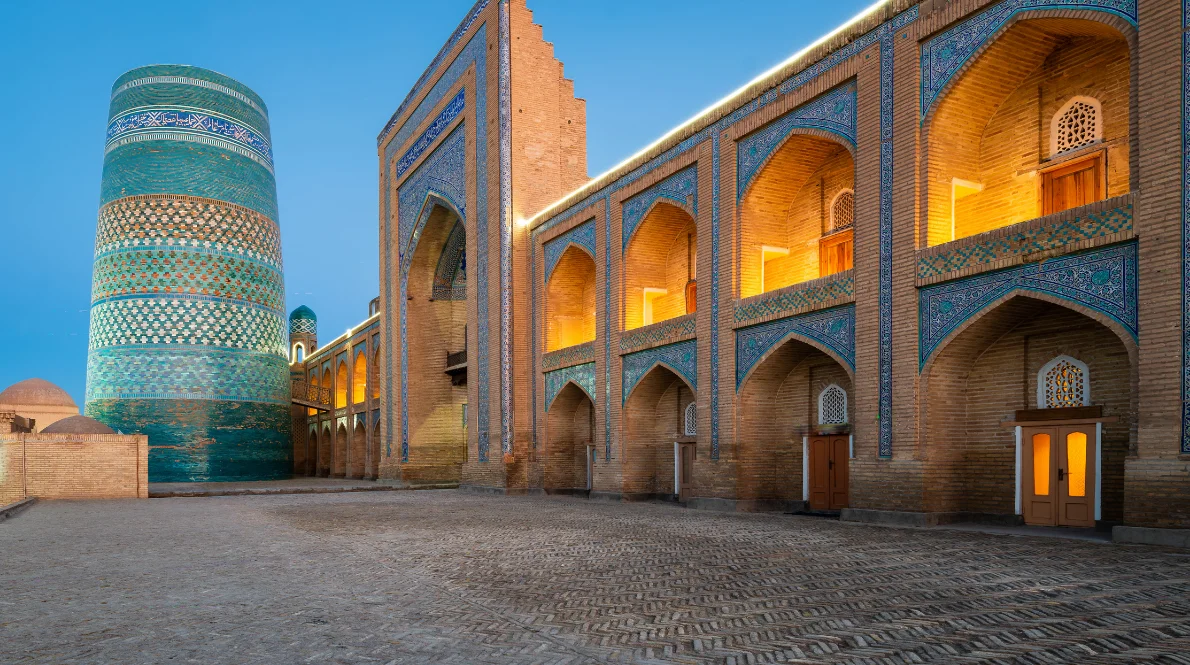
One of the largest and most beautiful madrasahs in Khiva, built in 1850–1852 by Muhammad Amin Khan. It has two floors and 130 cells that once hosted hundreds of students. Fully restored in 1979, it was adapted as a hotel for visitors.
Kalta- Minor
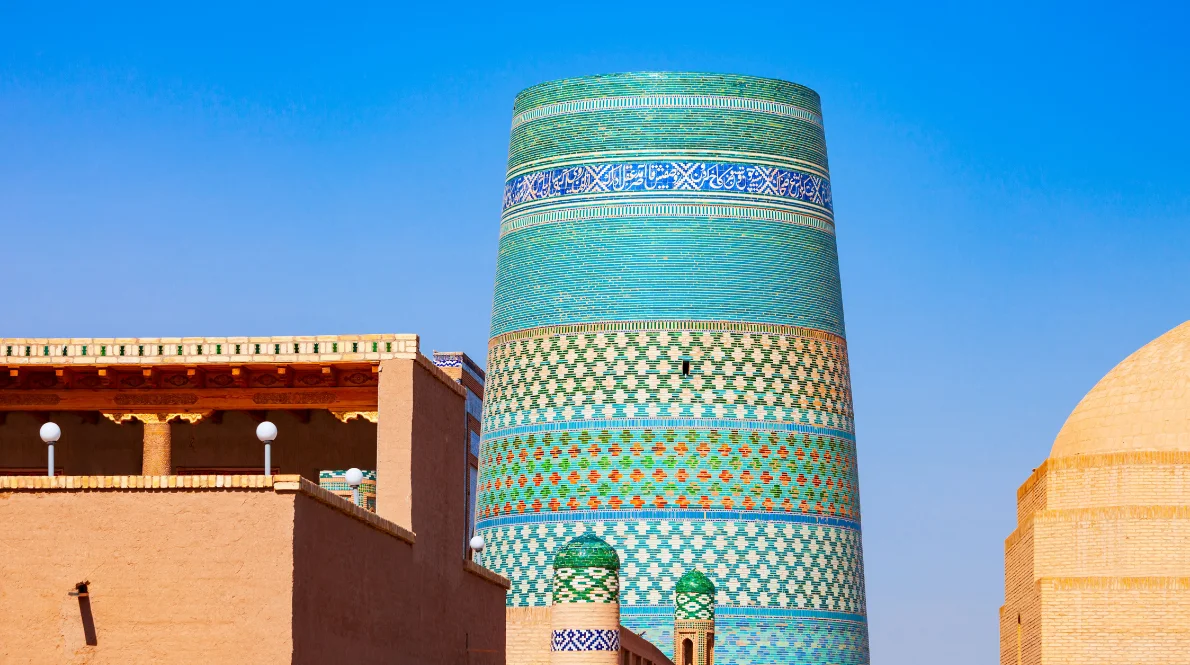
Kalta-Minor, the <<Short Minaret>>, was planned as the tallest minaret in Central Asia, but construction stopped in the mid-1850s. Its powerful, unfinished form is now one of Khiva’s most recognizable symbols. A passage leads to it from the second floor of the Amin Khan Madrasah.
Kuhna-Ark Palace
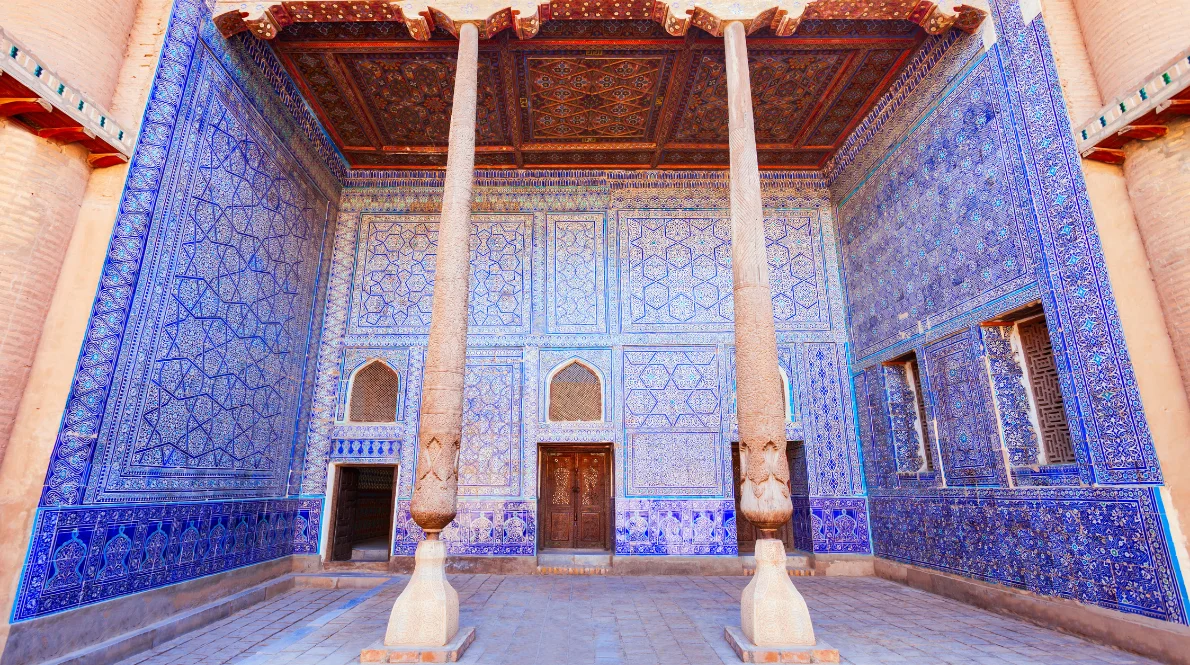
Kuhna-Ark is one of the oldest fortresses in Khiva and served as the rulers’ residence in Ichan-Kala. Inside were reception halls, mosques, workshops, armories, kitchens, and military facilities. From the Ak Sheich Baba bastion, you can enjoy a sweeping sunset view over Ichan-Kala.
Muhammad Rahimkhan II Madrasah
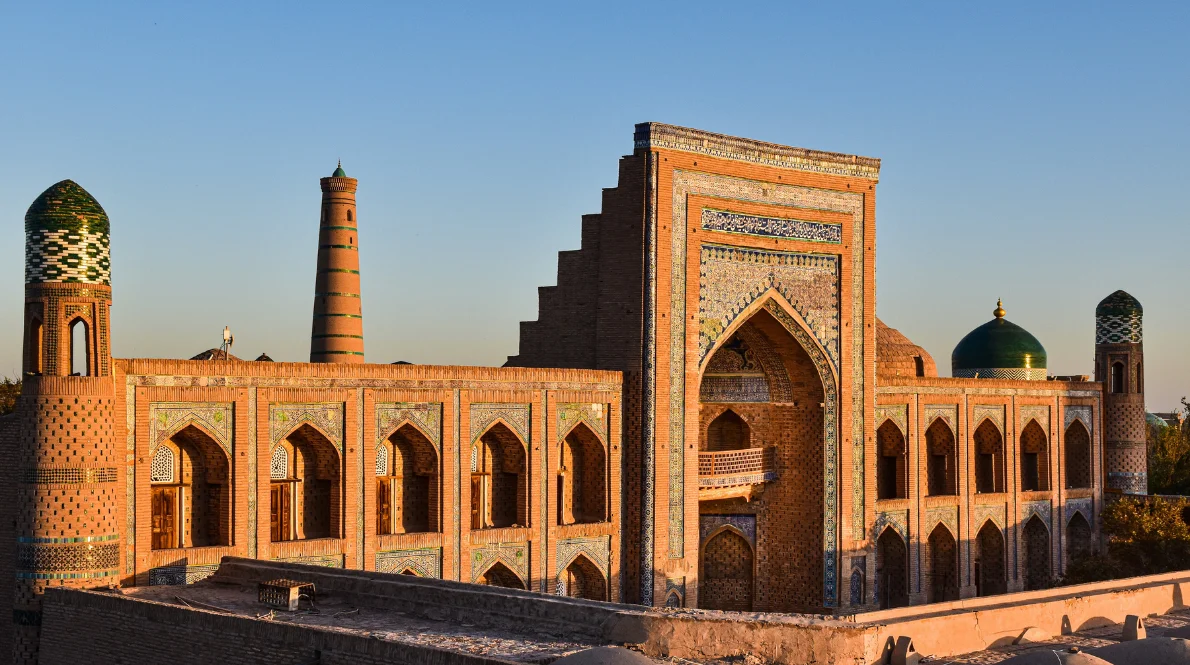
Built in 1871, this madrasah is associated with Muhammad Rahimkhan II, also known as the poet Feruz. Its layout and proportions distinguish it from other madrasahs. Today it functions as a museum dedicated to literature and Khorezm history.
Kazi Kalon Madrasah
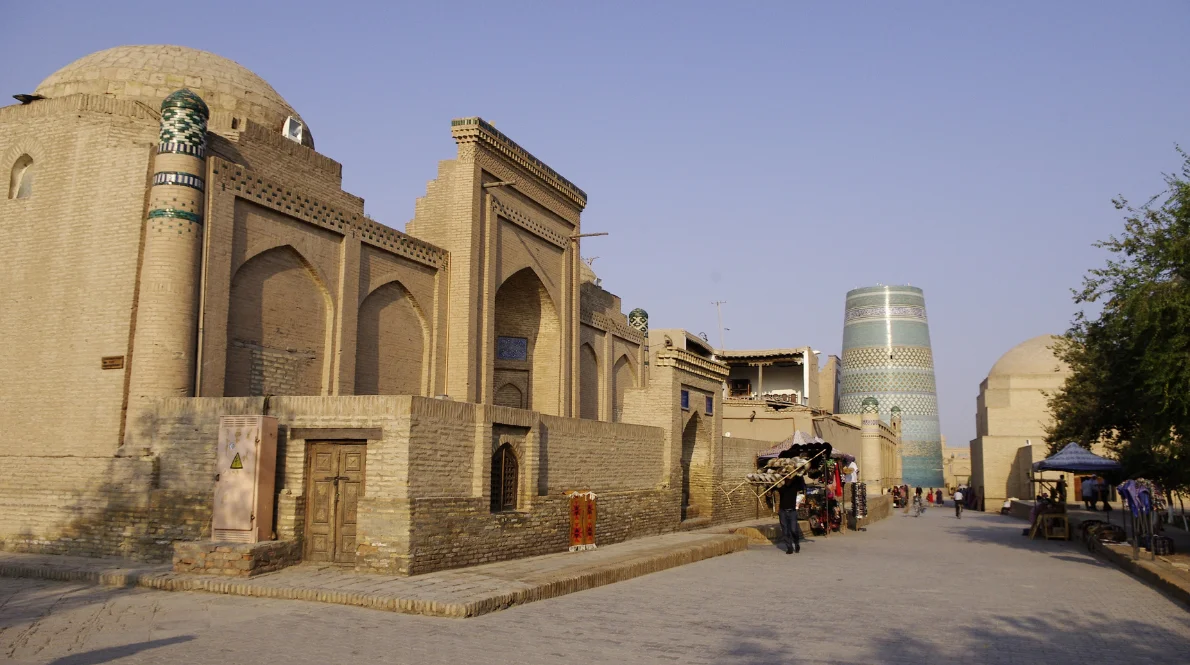
Founded in 1905 by Kazi Kalon Salim Oxun, the chief judge of the Khiva Khanate. It once housed students and today hosts a museum of traditional music, where travelers can see national instruments and hear local melodies.
Islam Xodja Madrasah and Minaret
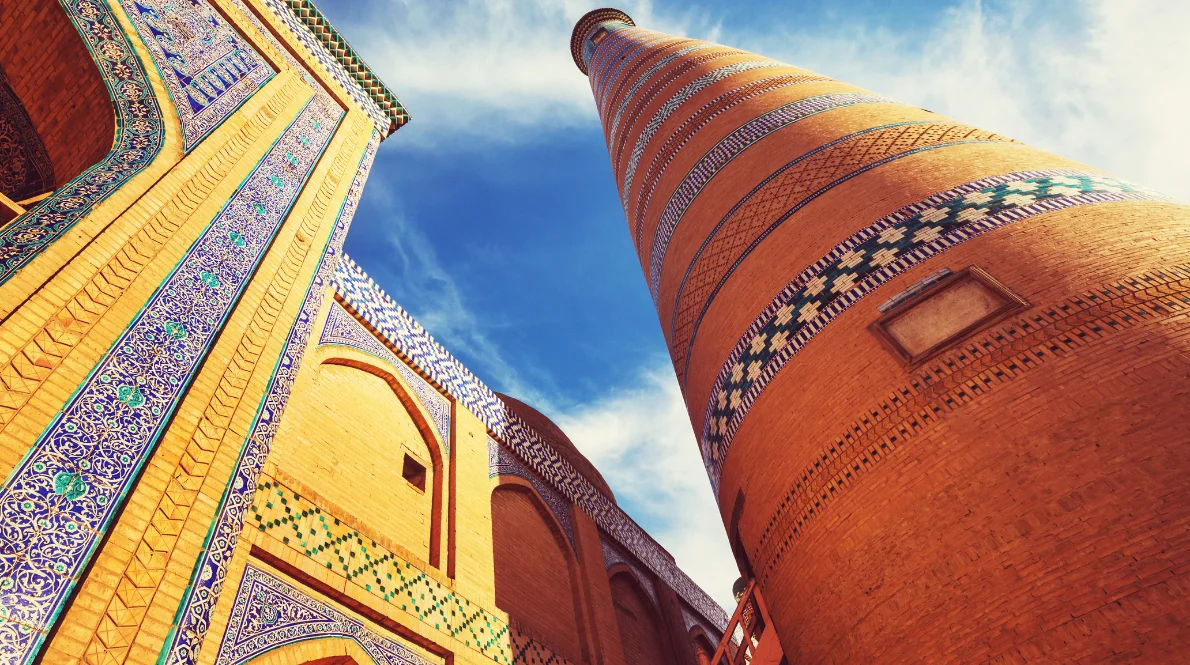
Built in 1908–1910 by Islam Xodja, a powerful vizier and patron of architecture in Khiva. The madrasah now houses a museum of applied arts. The minaret (46 m) is the tallest in Khiva, decorated with colorful glazed bricks and crowned with a shining metal <<Patal>>.
Juma Mosque
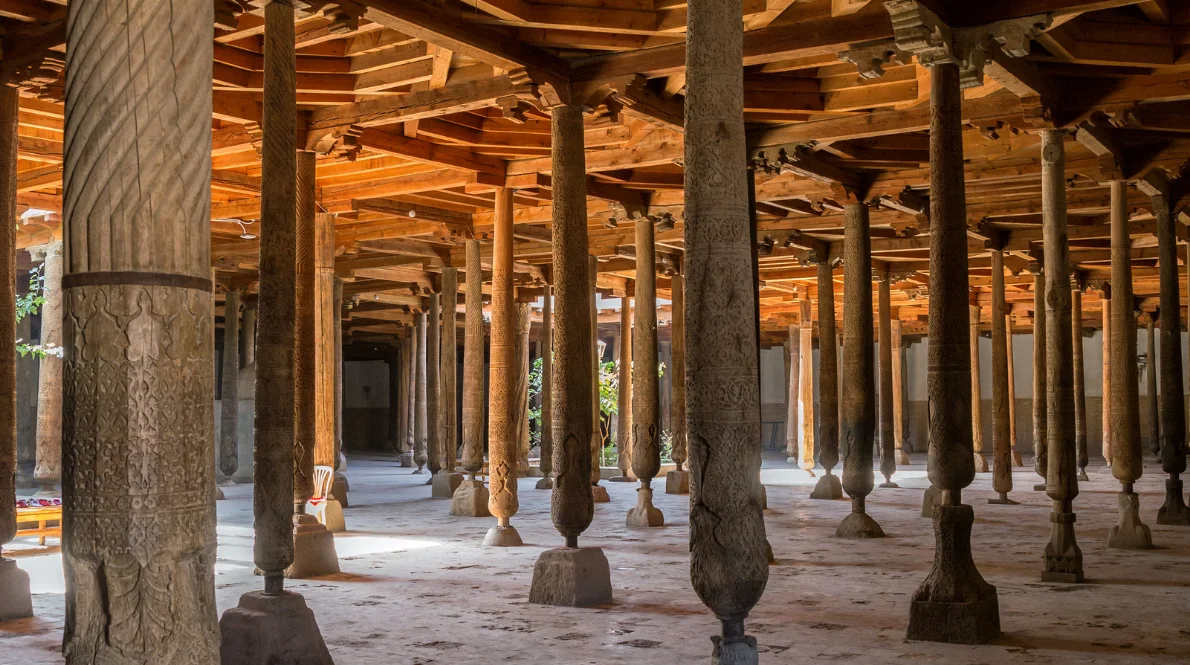
Khiva’s Friday Mosque is unique for its ancient Khorezm style and its forest of carved wooden columns—213 in total. Built in the 11th century and rebuilt in the 18th, it remains one of the most atmospheric places in the city.
Tash- Xovli Palace
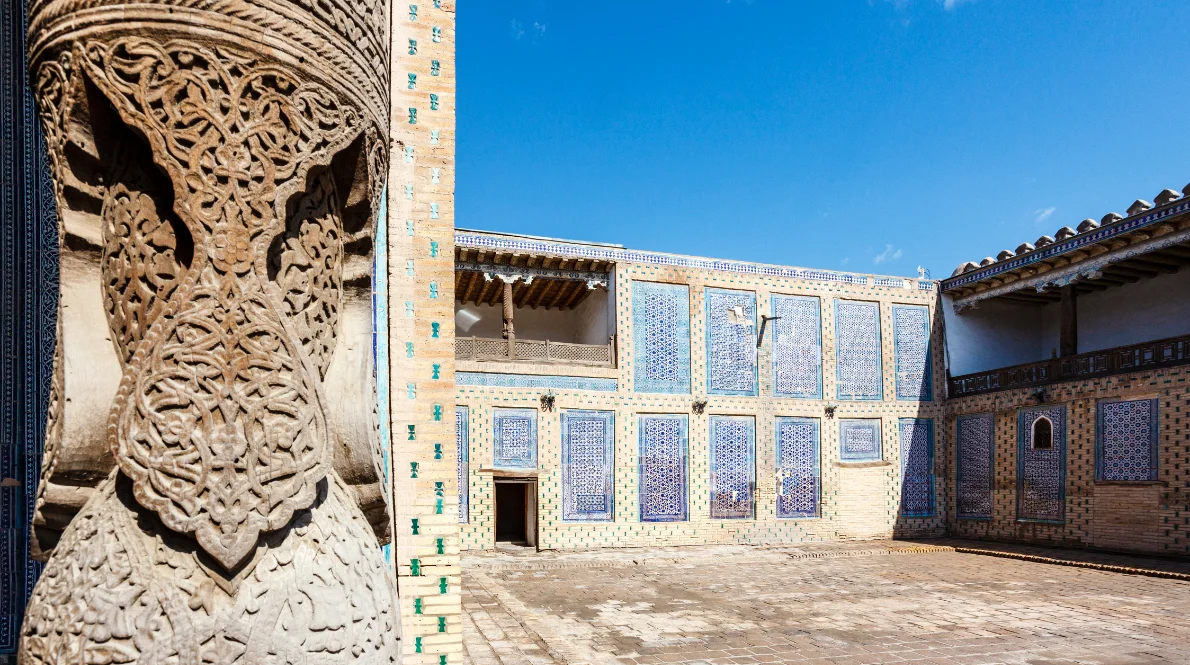
Tash-Xovli is a masterpiece of 19th-century Khorezm architecture, built by Allakulikhan (1832–1838). The palace includes ceremonial courtyards, guest areas, and a harem complex with richly decorated interiors.
Pahlavan Mahmud Mausoleum
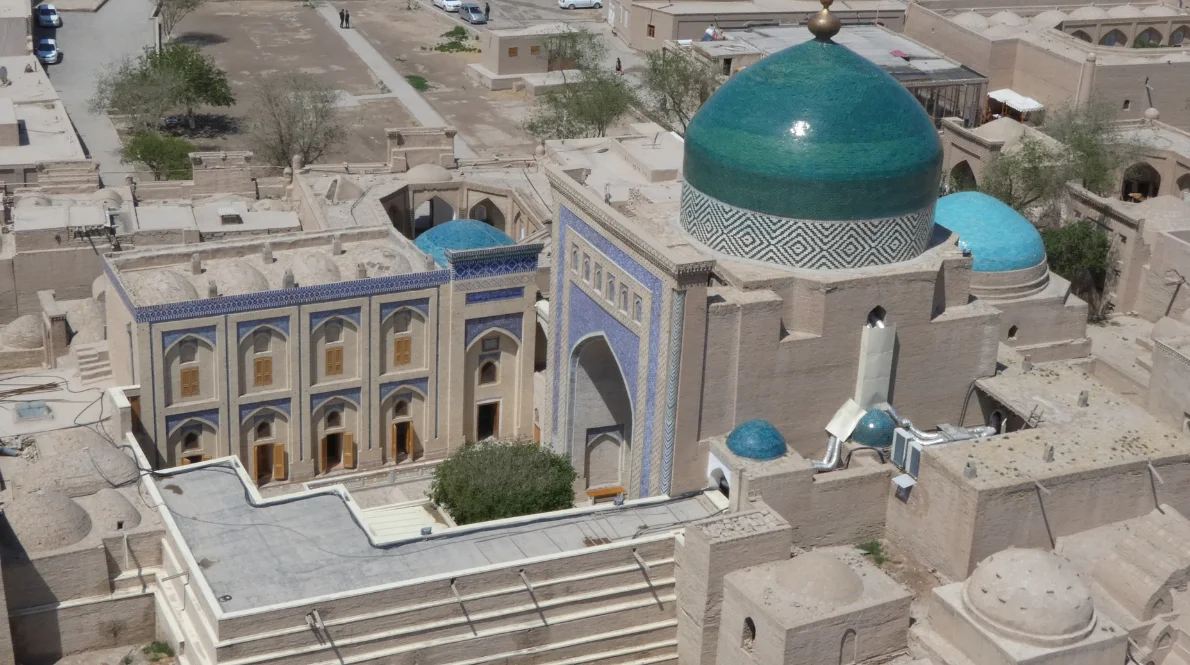
Originally built in the 14th century as a small crypt, this mausoleum honors Pahlavan Mahmud—Sufi master, poet-philosopher, and legendary wrestler. Today it is one of Khiva’s most important pilgrimage sites.
Dishan- Kala Rabat
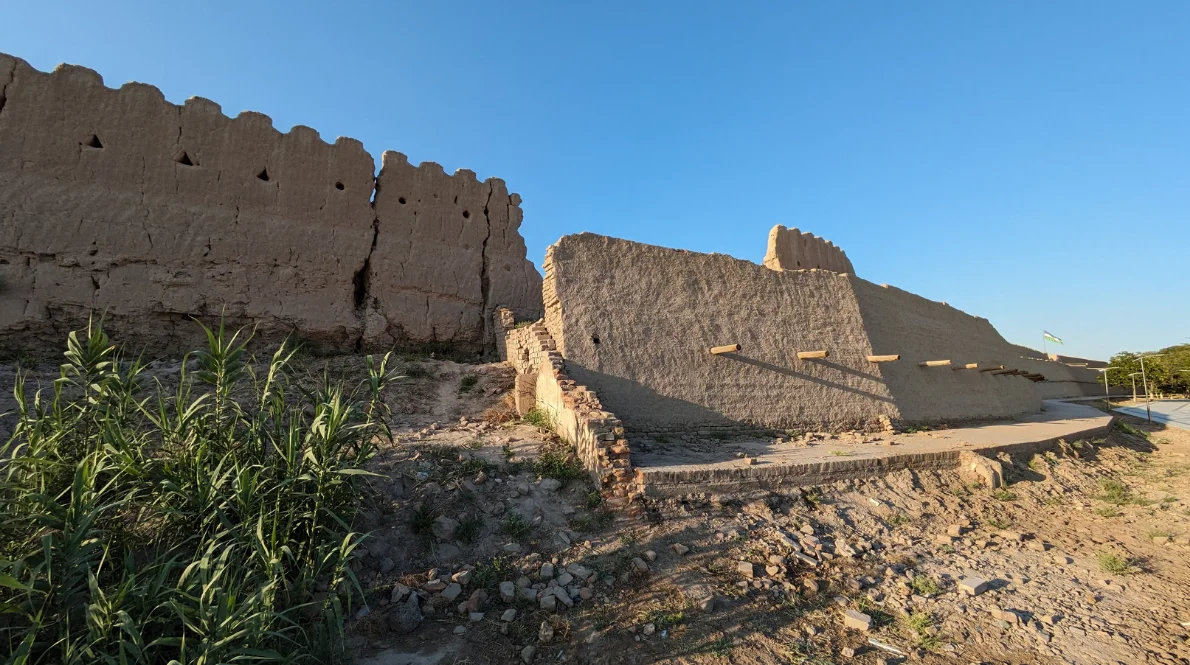
Dishan-Kala (the outer city) was founded in the early 19th century around Ichan-Kala. Craftsmen and merchants lived here behind long defensive walls with multiple gates. It also included gardens and country residences of the khans.
Nurillabay Palace
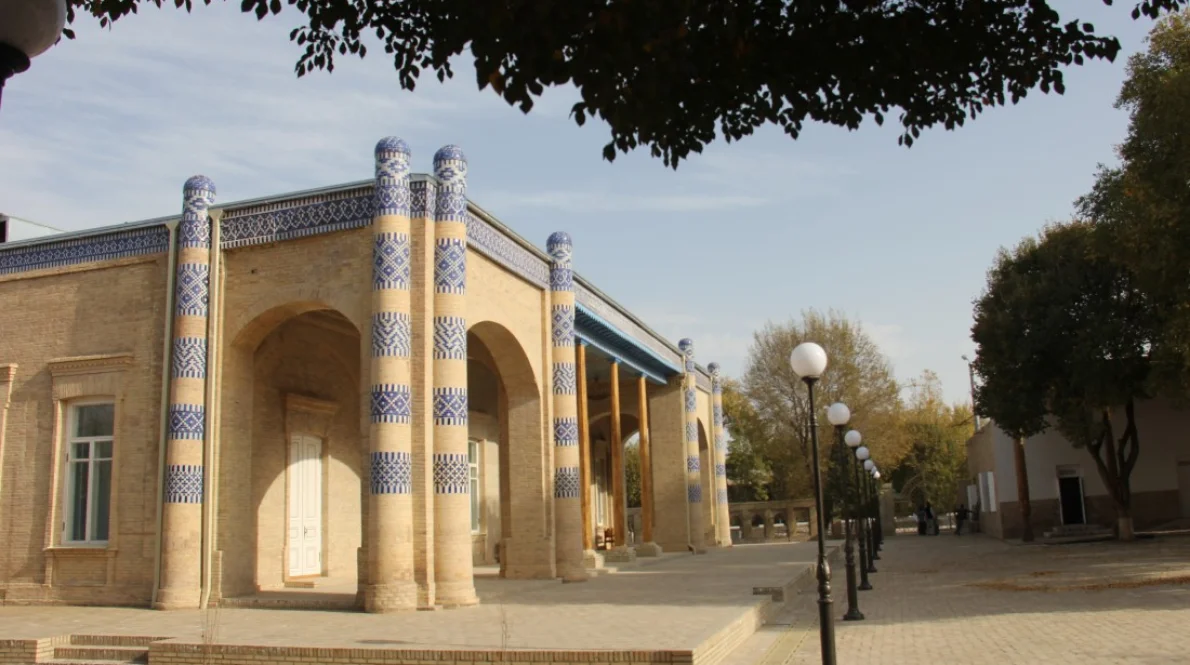
Built outside the old city, Nurillabay Palace stands out for its unusual blend of local and European elements. It was commissioned by Muhammad Rahimkhan II Feruz as a gift for his son and later adapted for ceremonial halls. During the Soviet period it served administrative functions and later became a museum; today it is known for its seven distinct halls.