Fill in the form and we will get back to you soon.
Karakalpakstan
Autonomous Republic of Karakalpakstan
The territory of the republic is 164,900 km² and the population is 1,817,500 people. The Autonomous Republic of Karakalpakstan is located in the north-west of Uzbekistan and has its own constitution. The constitution was first written in 1936. The republic has its own national coat of arms, flag, and anthem. In 1924, the Soviet Union recognized Karakalpakstan as an independent Autonomous Socialist Republic, and since 1936 the Republic of Karakalpakstan has had its own constitution. The inhabitants belong mainly to Turkic-speaking groups and speak the Karakalpak language. In terms of religion, they are Sunni Muslims. The territory of Karakalpakstan in the north-west is covered by the Kyzylkum Desert; in the south-east lie the Ustyurt Plateau and the Amu Darya delta. The southern part of the Aral Sea is within the territory of Karakalpakstan. There are also several mountain ridges; the largest of them is the “Sultan Uvays” range.
Mizdakkhan
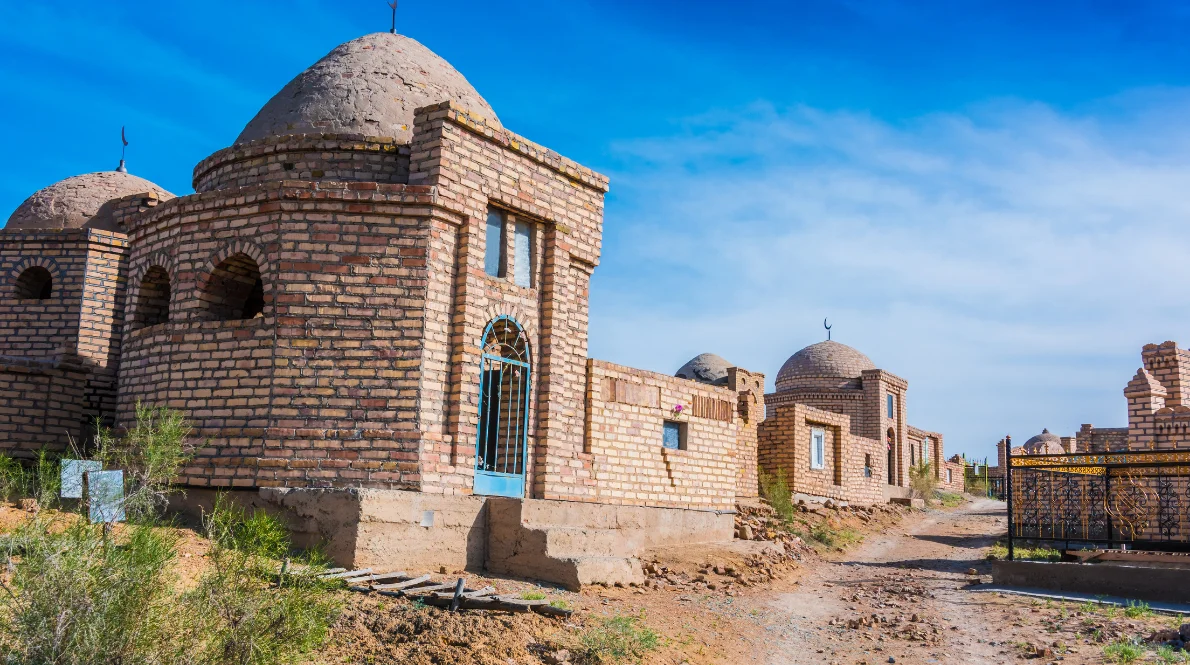 This is an impressive mausoleum. Locals say that the grave of the first human being, “Adam”, is located here. There are opinions that above Adam’s grave there is a structure called the “Clock of the Apocalypse”. Every year, bricks fall from the building; according to legend, when the last brick falls, the end of the world will come. Therefore pilgrims put the bricks back in place so that God hears and saves them. It is a necropolis where travelers can admire architecture from different periods.
Not far from Mizdakkhan are the ruins of the “Gyavur Kala” fortress. “Gyavur Kala” is a pre-Islamic fortress; even the name “Gyavur” in Arabic “Kafir” (unbeliever) means “Fortress of the Unbelievers”.
Ayaz Kala
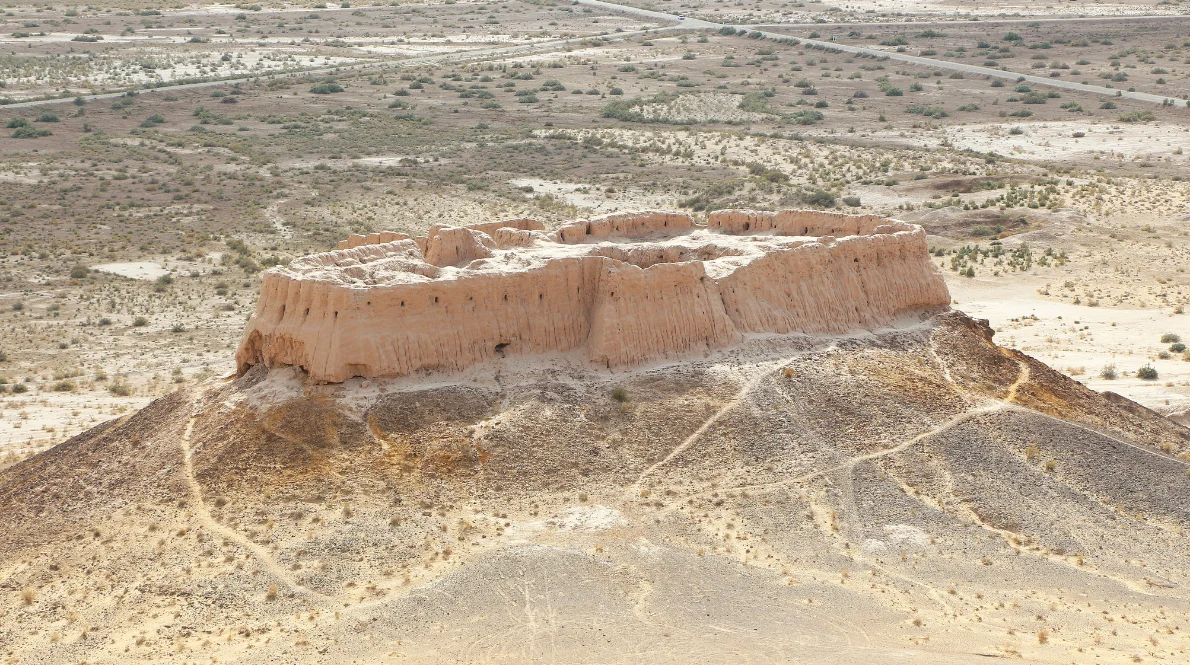 Ayaz Kala is one of the main fortresses among the ancient fortifications of Khorezm from the pre-Islamic period. The name Ayaz Kala means “Fortress of the Wind”. Historians believe that this fortress was built on a rocky hill in the 4th century. Its construction dates to a time when Zoroastrian traditions were among the principal spiritual beliefs of the locals. Archaeologists found remarkable burials with ancient fire-worship rituals: after purification by the sun and birds of prey, human skeletons were placed in ceramic vessels (ossuaries). Next to the main part of Ayaz Kala there is another building that was later erected on the hill. Today there are yurts for travelers who want to spend the night in the desert in a nomadic tent.
Tuprok Kala
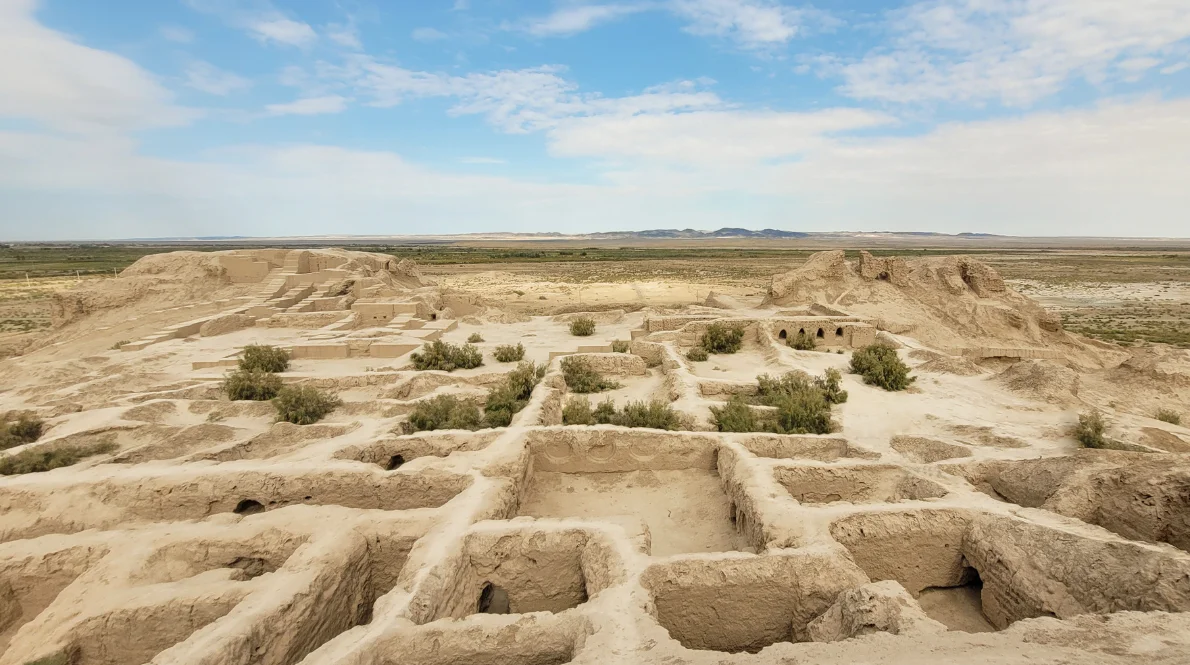 Tuprok Kala was the capital of the ancient Khorezm kingdom. The name means “Clay Fortress”. It dates from the 1st–4th centuries and was used as the residence city of the Afrigid dynasty. Archaeologists believe that this fortress also served as a center of religious rituals and that Zoroastrian temples were built here. They discovered fortress ruins with 150 halls decorated with impressive elements and wall paintings. During excavations, a very interesting Khorezm archive/record was found. This important historical source serves research into the history and culture of the people who lived in Central Asia during that period.
Janbas Kala
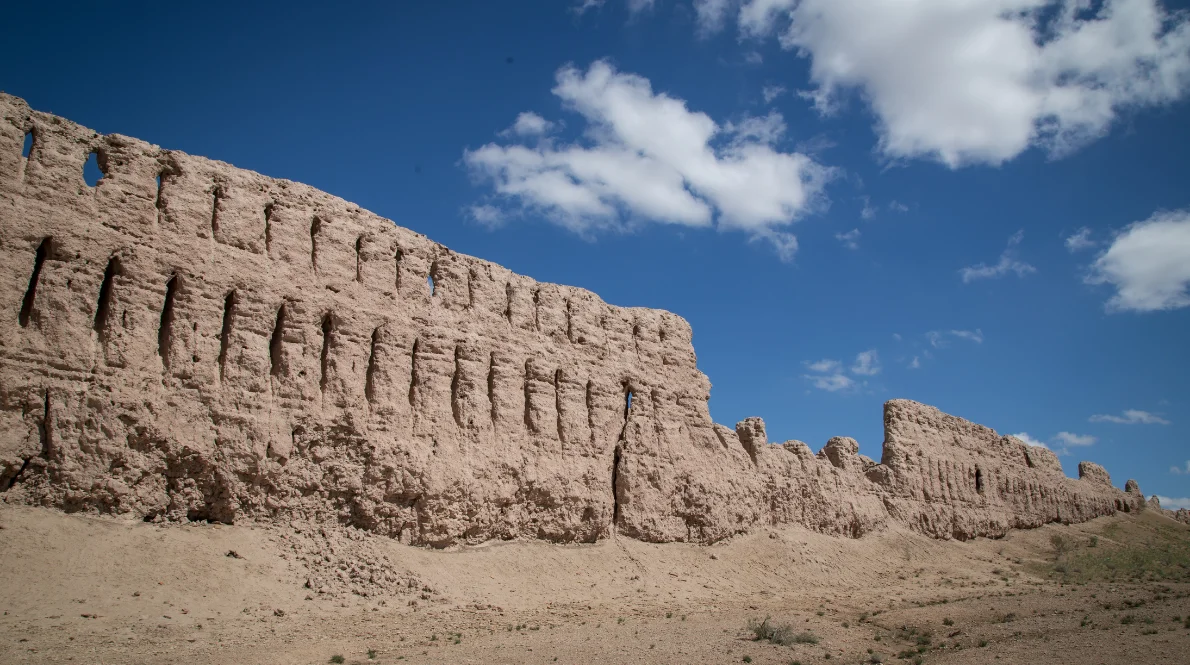 This fortress, translated as “Leaning Fortress”, was built in the 4th century. Janbas Kala does not look like other fortresses, and its main difference from other ancient cities is the absence of towers and minarets, which were integral elements of Khorezm architecture of that time. The fortress has a rectangular shape measuring 200 × 170 m. The height of the walls reaches 10 m, and in some parts even 20 m; between the outer and inner walls there are corridors 3 m wide. The fortress is well preserved compared to other structures because it was covered by sand dunes.
Sultan Uvays Korani Complex
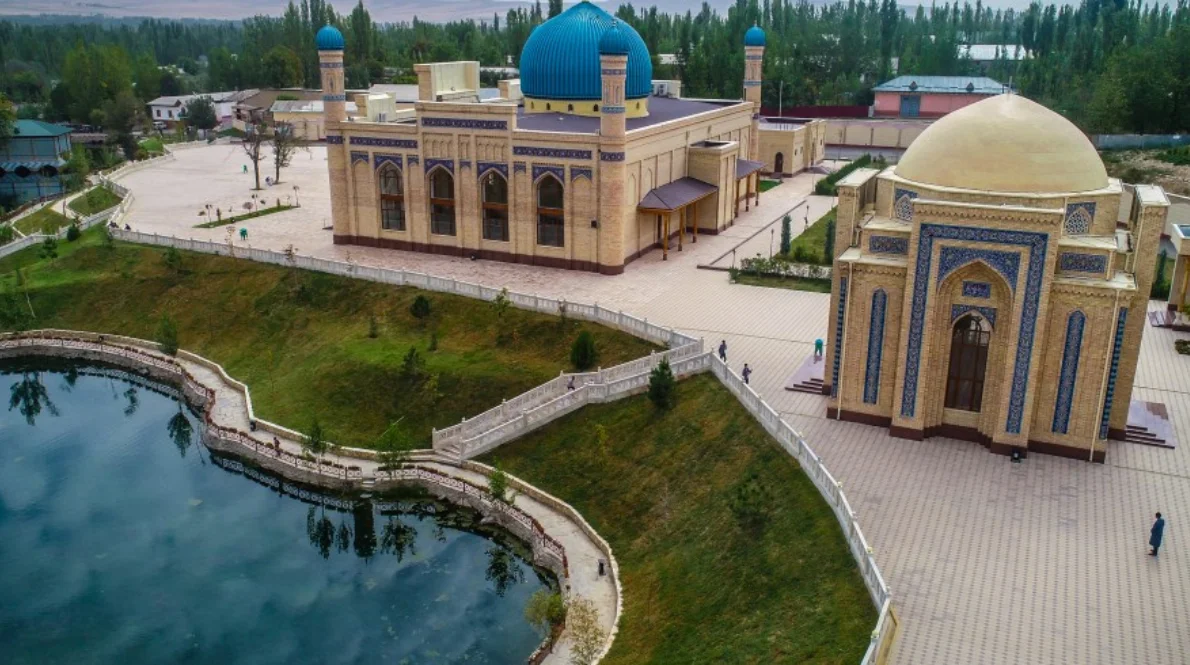 Xazrat Uvays ibn Omar al-Korani was one of the followers of the Prophet Muhammad. He was known in Central Asia as Uvays Bobo or Sultan Bobo. He was born in 625 in a small village called KARAYN in what is now Yemen. He died in the war at Sifri against Muawiya at the age of 32. He was buried in Syria. His symbolic grave is located in Karakalpakstan. The construction period is unknown; around the grave there is a building dating from the 17th–19th centuries. Not far from the Uvays Korani mausoleum there is a mausoleum called “Chinor Bobo”, said to have been the barber of the Prophet Muhammad. Today it is one of the most important pilgrimage sites for locals.
Chilpak Kala
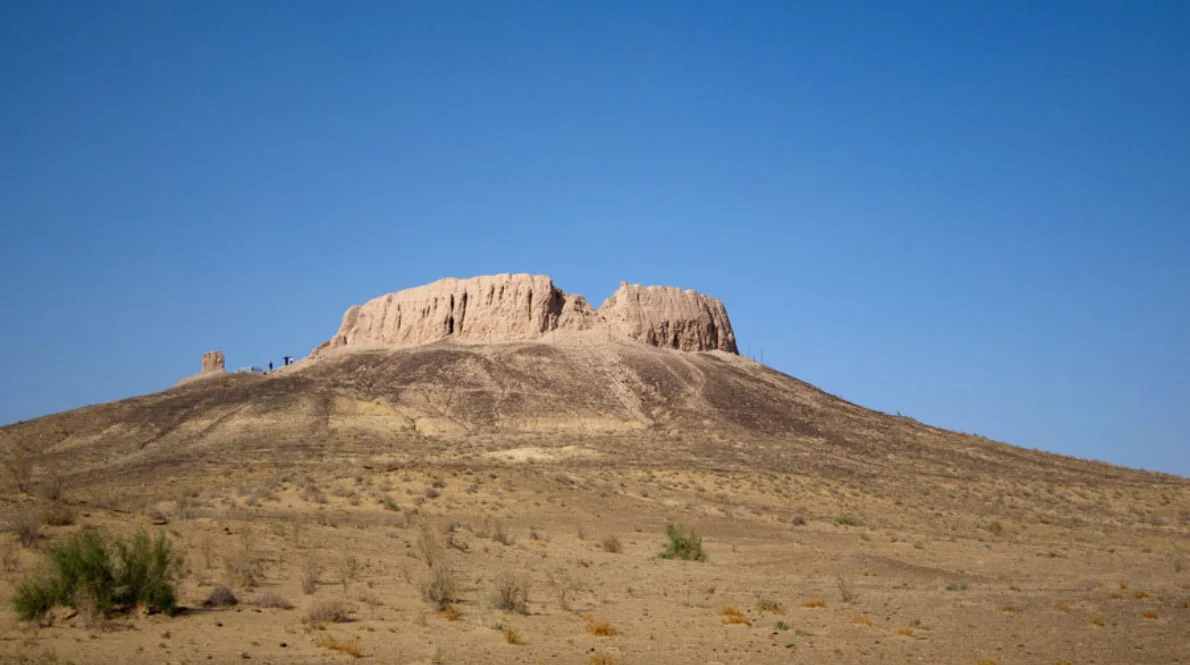 This architectural monument was a religious Zoroastrian center of ancient Khorezm. The name “Chilpak Kala” means “Fortress of Silence”. According to legend, the fortress was built by the deva Gadji, enemies of Ahura Mazda, who waged an eternal battle against the light. The circular tower with high walls above the sandy hill amazes with its size. The fortress was used as a Zoroastrian cemetery, where the bodies of the deceased were brought to be eaten by birds and animals, because burial and cremation were not permitted.
Aral Sea – Muynak
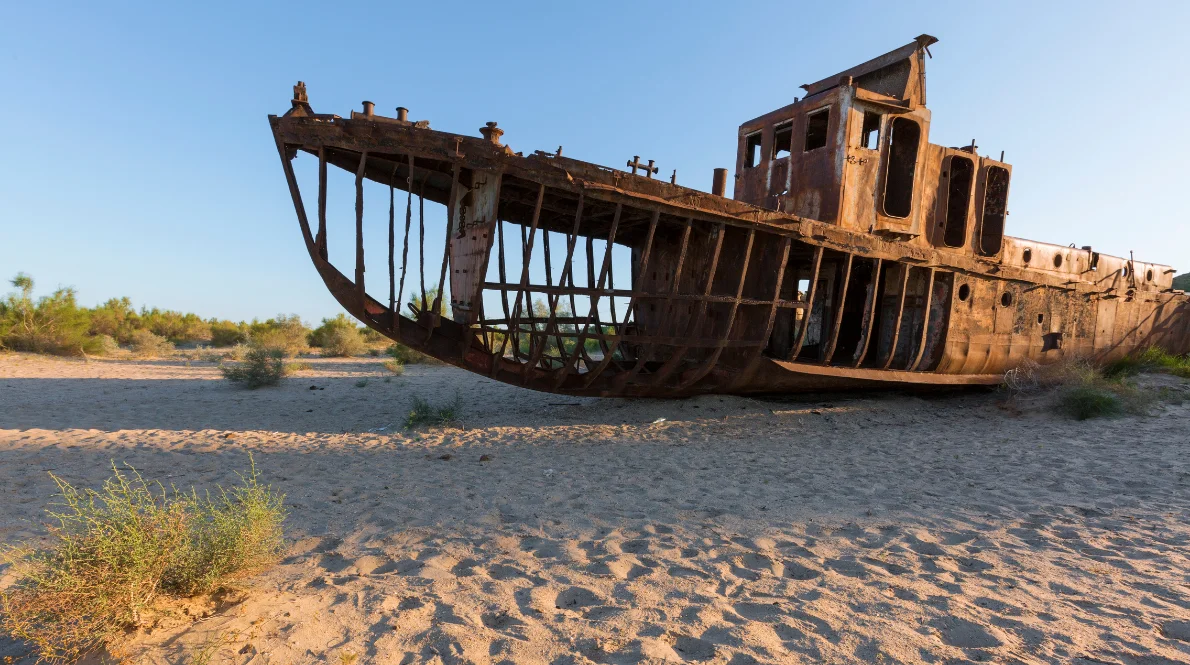 At one time this sea was the largest reservoir in Central Asia, covering territory in Kazakhstan and Uzbekistan, and it was also the fourth-largest lake in the world. Today it is almost dried up; it has been split into two lakes: the southern and northern parts. This disaster began in 1960. Thirty-four species of fish lived here, and in Karakalpakstan there were 5 fish factories and 1 fish cannery. For lovers of unusual travel, a local travel agency can organize a trip to the Aral Sea, where travelers can spend the night in a tent.
On the way to the Aral Sea there is a town called Muynak, founded in 1963; this town had the most important fish-canning factory. The population is 13,000. There used to be a large port, which today is a large “cemetery” of ships from that time, used during the flourishing period.
Ustyurt Plateau
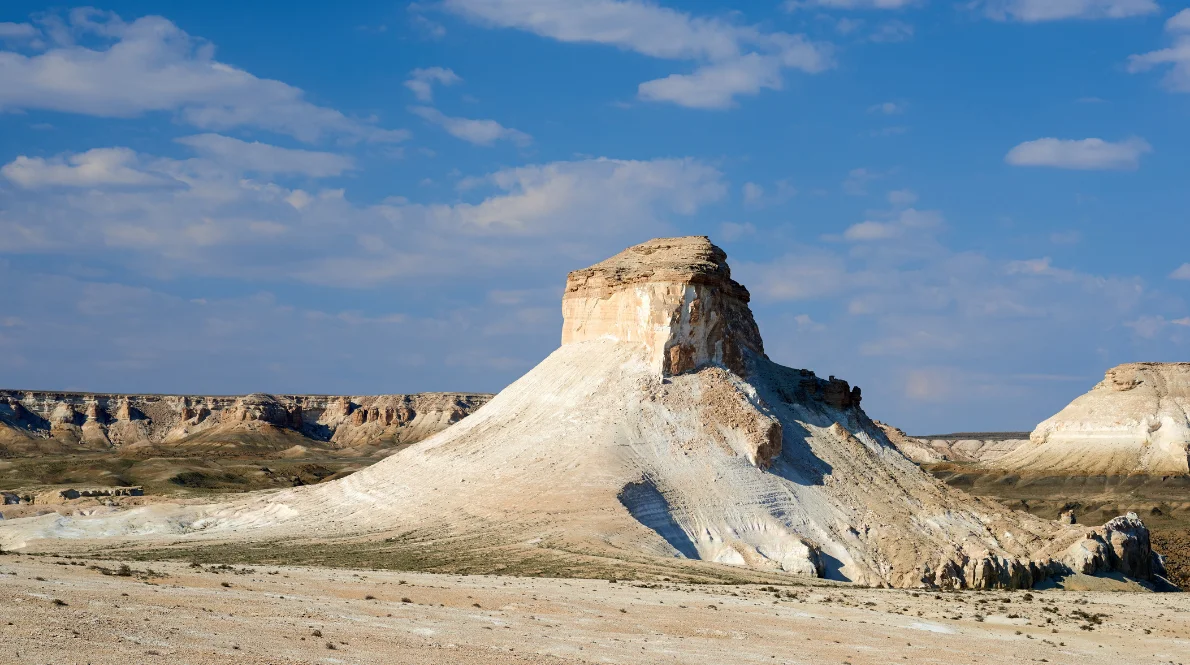 The Ustyurt Plateau has beautiful canyons. The natural world amazes with a large number of birds such as eagles and griffons, as well as gazelles and wild horses. The main sights of the Ustyurt Plateau are its cave dwellings with rich and valuable artifacts. They are more than 1,200 years old. In 1951, geographers found ceramic items dating to the 12th–13th centuries. During the study of these caves, archaeologists working in several caves found a ship and a drawing on the wall. The Ustyurt Plateau is a wonderful place for travelers who love safaris, nature, and eco-travel. This place is a dream for photo tours.
Nukus
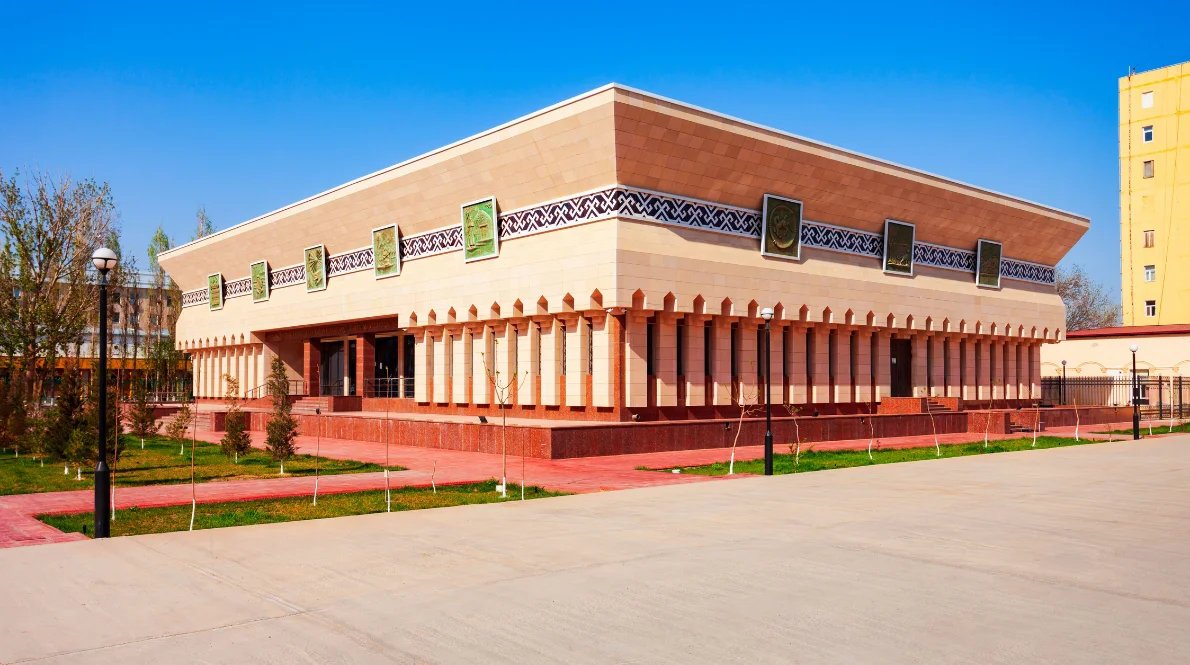 The capital of the Autonomous Republic of Karakalpakstan was founded in the 19th century as a small village and established as a city in 1932. Over the years, Nukus expanded into a city. The name “Nukus” means “nine sons”. According to legend, the ruler of Khorezm became very angry with his nine wives and exiled them, ordering them never to return to the territory of present-day Nukus. The nine wives married different craftsmen and gave birth to nine sons, whose number gave the city its name: Nukus means “Nine Sons”. Tradition says that the Karakalpak people trace their roots to the nine sons of a khan, and that the Karakalpak people came from the khan’s nine wives. The population of today’s Karakalpakstan is 1,817,500.
Igor Savitsky Museum
A very famous attraction for tourists is the museum named after Igor Savitsky, known as the “Louvre of the Desert” and the “Miracle of the Desert”, founded in 1966. The museum has more than 280 exhibits. Igor Savitsky, who founded this museum, was a famous Russian archaeologist and a lover of Central Asia. In this museum you can find objects of material culture and art of ancient Khorezm, as well as the applied arts of the Karakalpaks. Tourists who love art can enjoy masterpieces of the Russian avant-garde school of painting. In addition, this museum has the best and richest collection of artworks in Central Asia. You can discover archaeological finds, objects from the period of ancient Khorezm—the homeland of the Zoroastrian religion and its holy book “Avesta”—unique terracotta figurines of the Zoroastrian fertility goddess “Anahita”. Ossuaries—vessels for bones.