
Fill in the form and we will get back to you soon.
Fergana
Fergana (formerly Skobelyev) has been the administrative, economic, and cultural center of the region since 1938. The name Fergana is known since the 13th century; in Sogdian it appears as “Parghana/Praghana”, in Sanskrit it conveys the meaning of a “small region”, and in Persian it is described as a “valley between mountains” or a “closed valley”. Fergana lies 580 m above sea level. The population is about 230,000. Within Fergana Province there are three major cities of great historical and cultural value: Kokand, Margilan, and Rishtan.
Kokand
According to historians, this city is more than 2,000 years old, although the first written references appear only around the 10th century. There are several versions of the city’s name. For example, Istakhri and Ibn Hawqal mention “Khavokand”: Kokand is interpreted as “pleasant/beautiful” or “the city of winds”. Later the name Kokand was used as “the city on the hill”. In the early 18th century, it became the capital of the Kokand Khanate until the 19th century—Kokand’s golden age. Today the population is about 215,000, making it the second-largest city in Fergana Province.
Khudayar Khan Palace
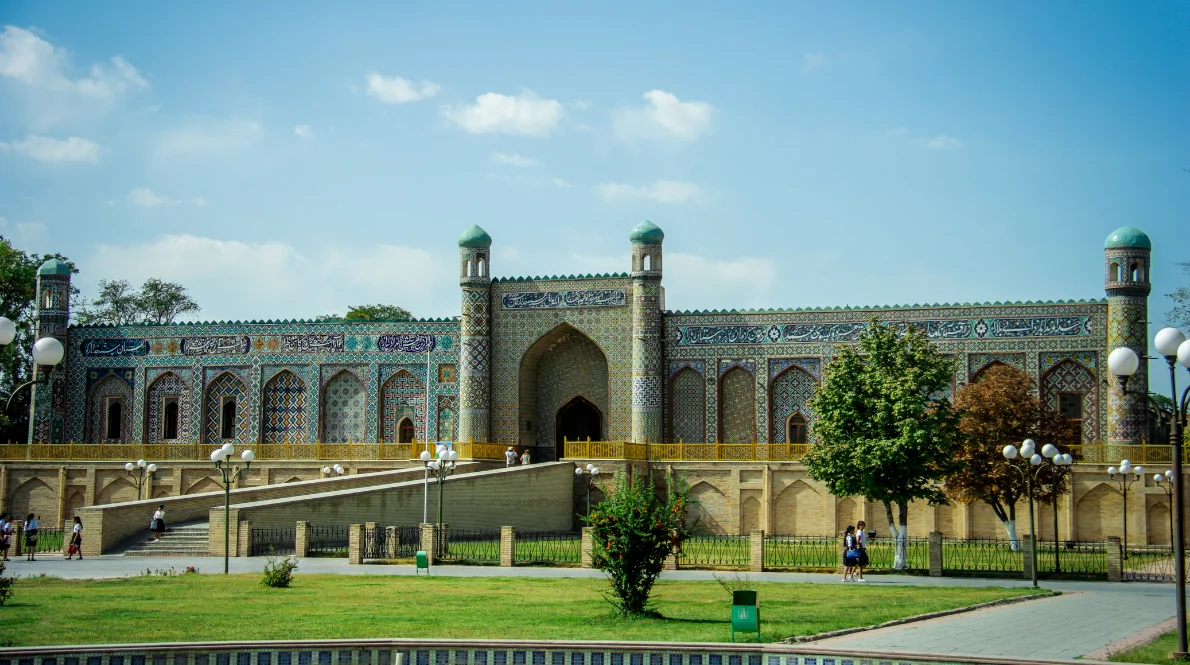 Khudayar Khan, the last khan of Kokand, began building his palace in 1865. Historical sources say that before it, a palace built by Emir Umar stood in the suburb and was called Zarrinsaroy (“Golden Palace”), which was destroyed in 1842 by the Bukhara ruler Emir Nasrullo. In the West, Emir Nasrullo was known as the “Butcher” or the “Nero of the East” (Claudius Caesar Nero). The Khudayar Khan Palace once covered about 8 hectares and consisted of four parts: the outer palace, inner palace, central palace, and garden. Today, only the most important section—the “inner palace”—can be visited.
Juma Mosque
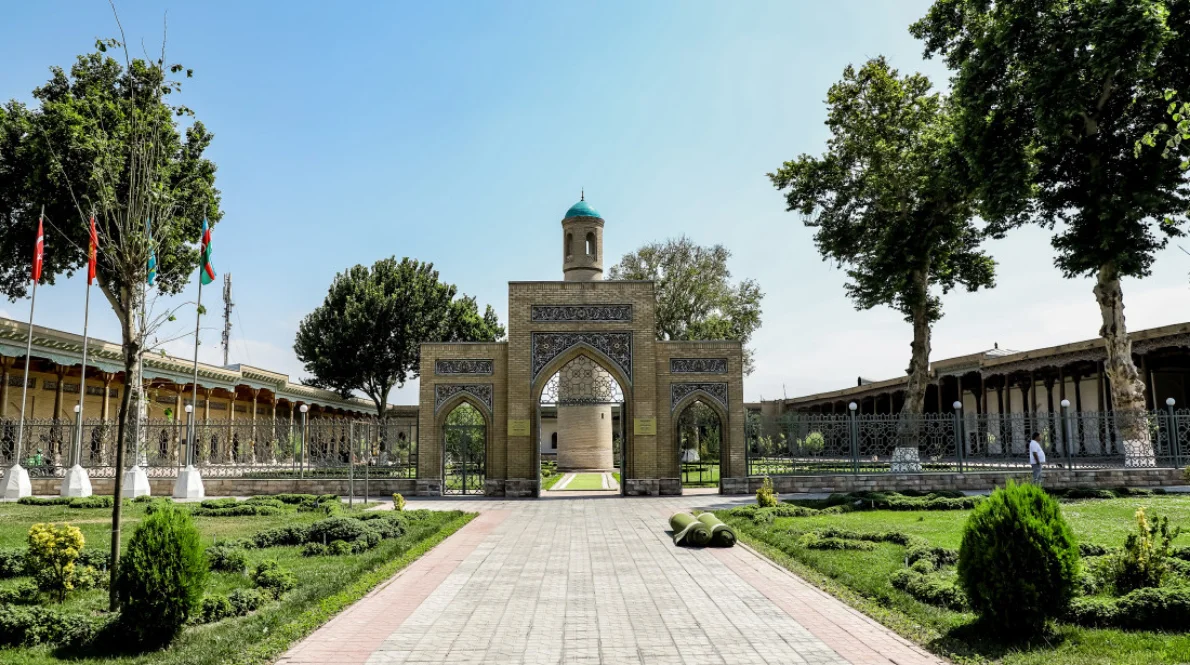 Construction began in the early 19th century by order of Alim Khan, but it was stopped by the Sufi sheikh Muhammad Okhund. He told the ruler that building a mosque (a house of God) with tax money would be haram, because taxes were often collected through pressure on the poor, and spending such funds on a sacred building would not be righteous. When Alim Khan’s brother, Umar Khan, came to the throne, he continued the project using financing from waqf lands (agricultural fields whose harvest supported the mosque). The mosque includes a large veranda/terrace measuring 97.5 × 22.5 m and its own khanqah. The ceiling of the ayvan (veranda) is made of 114 wooden elements, symbolizing the 114 surahs of the Qur’an. The mosque has 99 columns, representing the 99 names of God (Allah’s attributes such as the Merciful and the Compassionate).
Dahmai Shohon
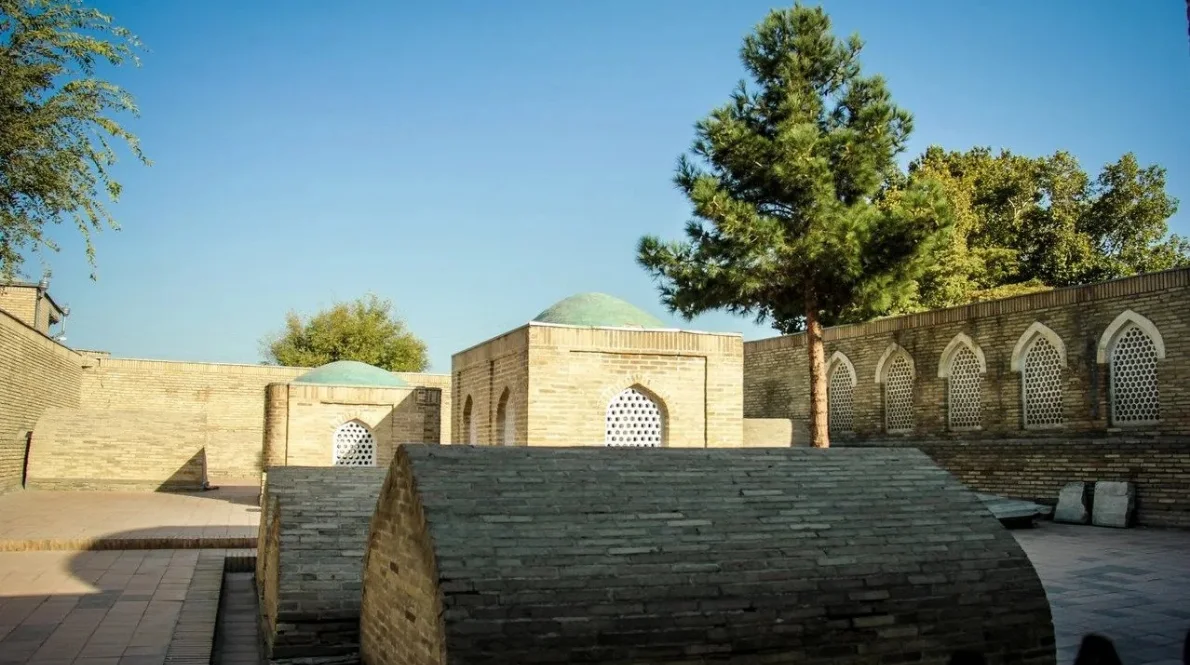 Dahmai Shohon is a mausoleum for the rulers of Kokand dating from the 18th century. Earlier rulers were buried in Kadamjoy. The word “dahma” comes from “dohili mozor” and refers to a structure similar to a crypt. The complex was commissioned by Umar Khan for Norbutabiy Khan, but Umar Khan died before it was completed, so the work was continued by his son Madali Khan. The architects Usta Muhammad Koze and Muhammad Najjor finished the construction in 1824. The ensemble includes an entrance gate, a mosque, and a tomb—considered the finest parts of the complex. A typical Fergana feature is the decorative “pepper” motif.
Norbutabiy Madrasah
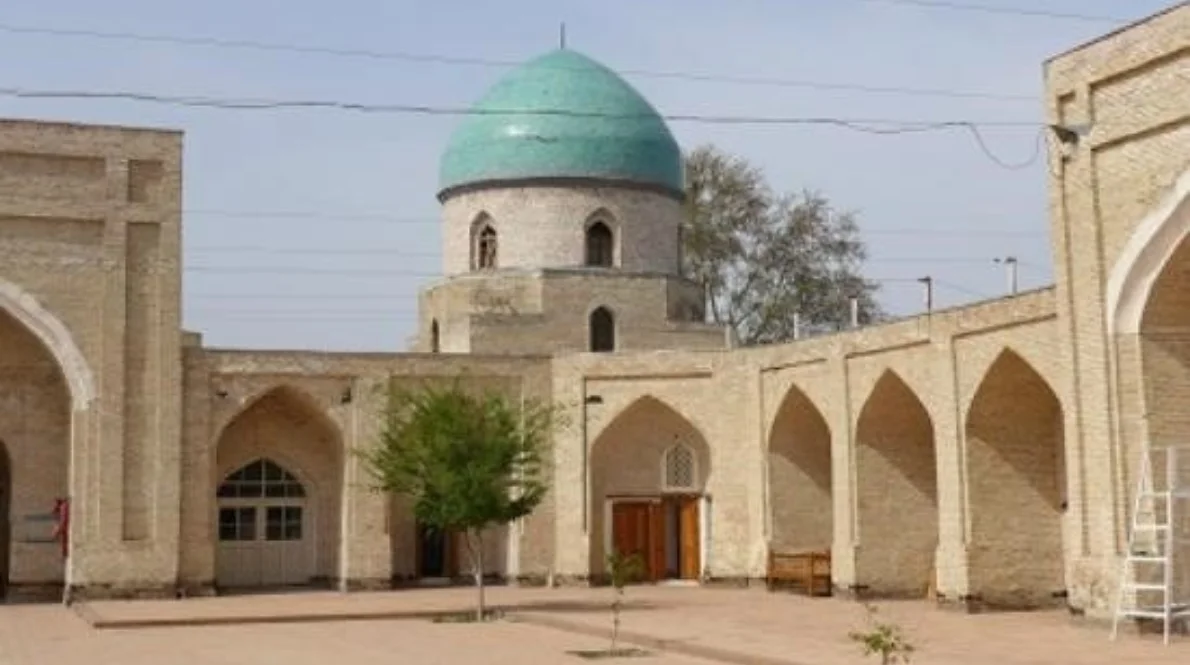 During the reign of Norbutabiy Khan (1766–1798), the Kokand Khanate expanded significantly. Norbutabiy decided to build a madrasah in Kokand that could rival those of Bukhara and Samarkand, so he invited master builders Usta Kosim and Muhammad Solih from Bukhara. The madrasah was completed in 1798. It functioned until 1924, and during the Soviet period it served as barracks for the Red Army.
Dahmai Modari Khan
This complex is a mausoleum for women of the Ming dynasty that ruled in Kokand. It was built in honor of Zuhro Oyim, the beloved wife of Norbutabiy. The complex was commissioned in 1825 by the famous Uzbek poetess Mohlaroyim Nodira. In Soviet times the mausoleum was destroyed; only the khanqah has survived. Here are the graves of princesses Oyposhsho Oyim, Nurjahon, Hokim, Oftob, and Khonzoda Oyim.
Muhammad Amin Khan Madrasah
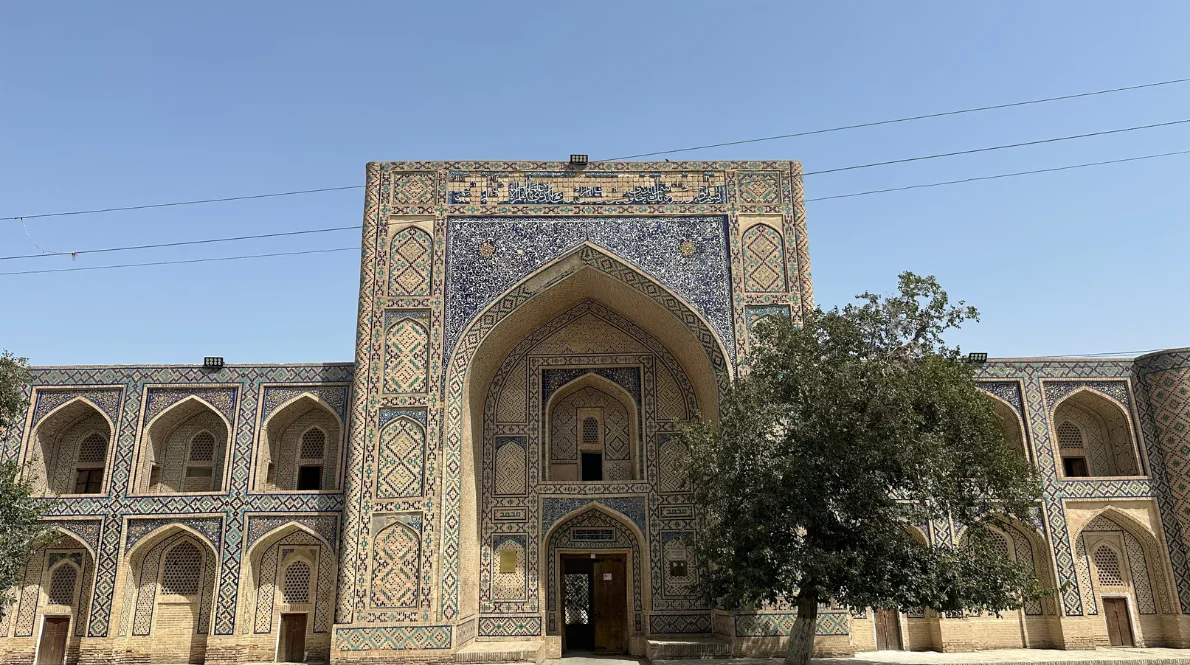 Kashgar in western China was once part of the Kokand Khanate, and the khans controlled commercial interests there. They sent envoys to manage trade relations, taxes, and the rights of Kokand merchants. Muhammad Amin Khan served as such an envoy in Kashgar. After returning to Kokand, he decided to build a madrasah in the capital. Master builder Usta Bozor completed it in 1837. In the early 20th century, the building was restored with the help of the chief judge Kamol Qozi, and the madrasah became known as the “Kamol Qozi Madrasah”. Today it houses the “Oltin Meros” (“Golden Heritage”) office.
Margilan
 The city is more than 2,000 years old. The first written references appear in sources from the 10th century. Earlier, the city was called Marginon—from “murgh” and “non” (chicken and bread)—often linked to the time of Alexander the Great. Later it became known as Margilan, interpreted as “lawn/grass”. Margilan is one of the most important centers of silk production. The city lies 475 m above sea level. The population is about 185,000.
“Yodgorlik” Silk Factory
Margilan is Uzbekistan’s leading center for silk products. At the “Yodgorlik” factory, visitors can observe the entire process—from sericulture to dyeing the silk fabric. Founded in 1972, the factory is notable for keeping traditional handcraft techniques alive. It produces about 6,000 m of silk fabric per year. Locals call its famous product “Khan Atlas” (“Royal Silk”).
Rishtan
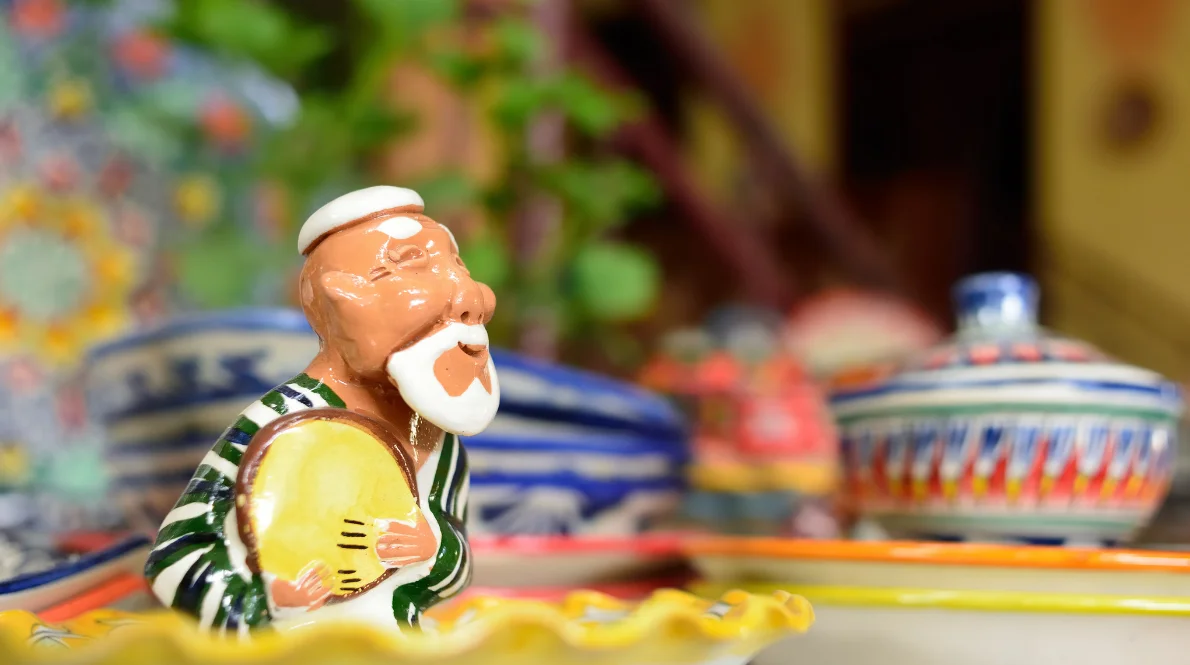
The name of the city comes from the Sogdian word “rush” meaning “red earth” (due to the red clay—Hoki Surch). The element “-tan” means “birthplace” or “home”, so Rishtan can be translated as “the home of red clay”. The city is around 1,000 years old. Before the Mongol invasion, it was an important stop on the Silk Road linking Indian spices and Chinese silk. Rishtan is proud of its ceramic art, which has been highly developed here since about the 10th century. Today there are more than 3,000 ceramists in the city. The population is about 46,000. Local masters can demonstrate the process to visitors interested in the craft.