
Fill in the form and we will get back to you soon.
Bukhara
Bukhara is one of the oldest and most authentic cities in Central Asia. It is one of the three masterpieces of the Silk Road. The name “Bukhara” comes from the Sanskrit word (Vikhara) and means “monastery,” because this city has always been a religious city — even in the Zoroastrian period (fire worshippers). Bukhara is the Muslim spiritual and religious center of the East (Kubbat al-Islam – Dome of Islam). The city is 2,500 years old. The population is about 300,000.
Labi–Xovuz Complex
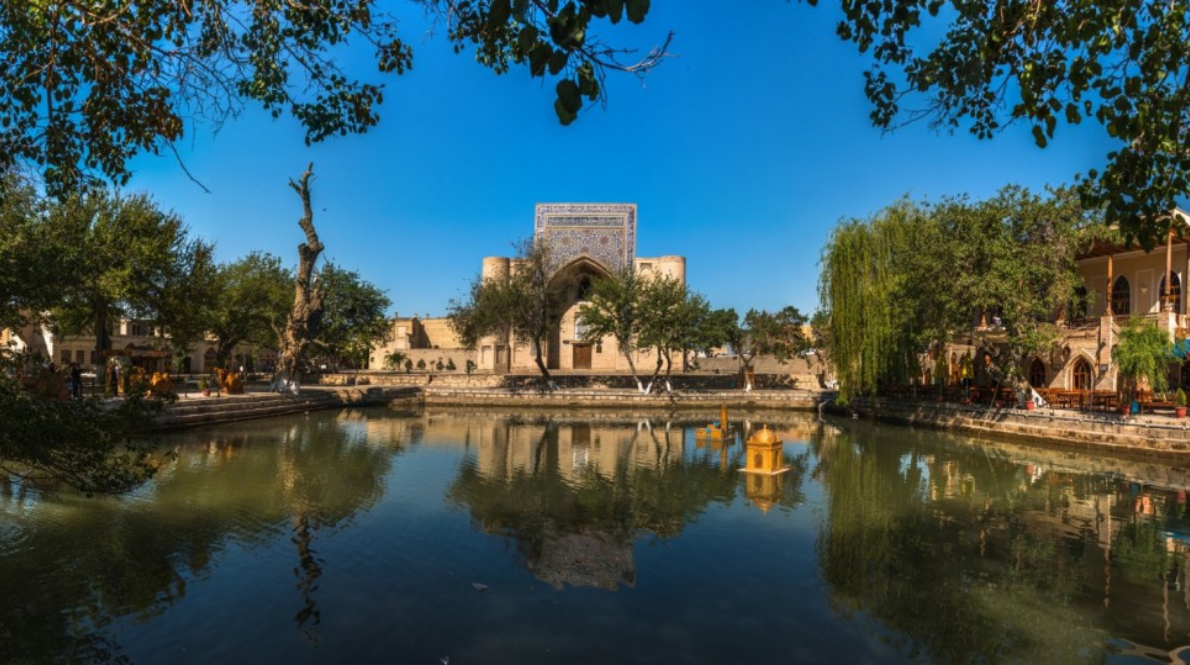 This architectural ensemble Labi–Xovuz (“by the edge of the pond”) consists of three impressive buildings. The Kukaldosh Madrasa on the east side is the largest in the city and was built in the 16th century. There are two more sacred buildings, both commissioned by the minister Nodir Devon Begi, dating to the 17th century (east–west). The pond itself also dates to the 17th century. It is rectangular: 36×42 m and 5 m deep. The Labi Xovuz pond is fed by a famous canal called Shochrud. The magnificent façade of the Nadir Devon Begi Madrasa is decorated with living creatures, which is forbidden in Islam. Here you can also see a monument to Xoja Nasriddin — the hero of Uzbek jokes and the local counterpart of Till Eulenspiegel.
Kalon Minaret
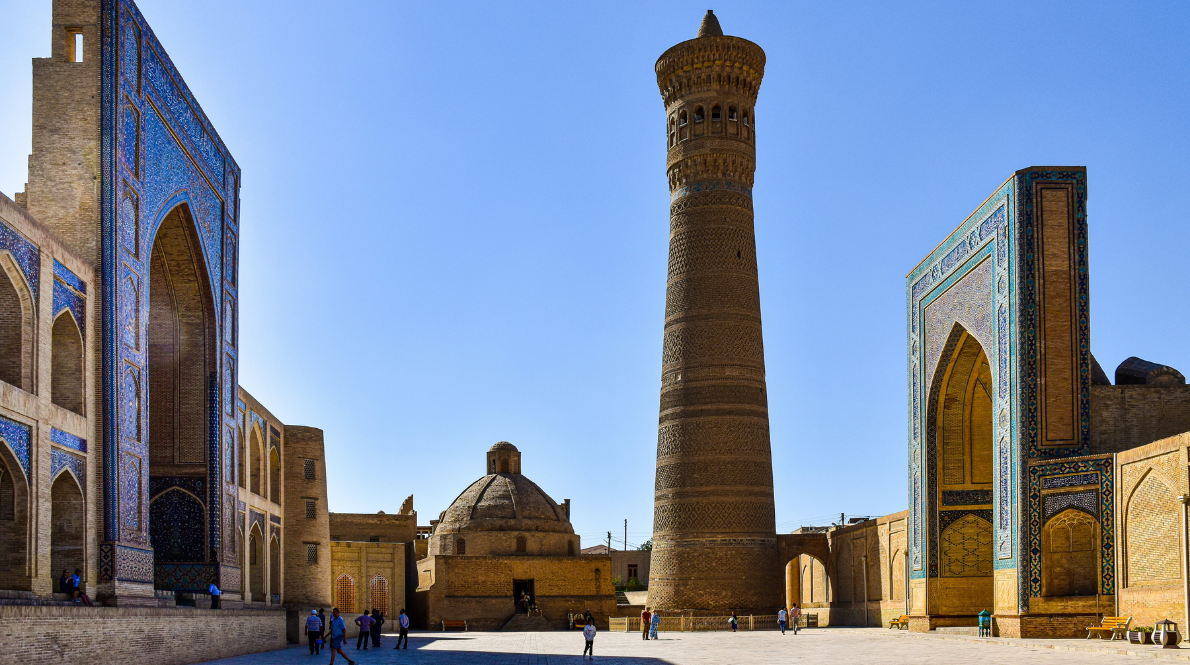 The word “Kalon” means “great” or “majestic.” The minaret was built in 1126 during the rule of the Karakhanid dynasty under Arslankhan. It is part of the Poi Kalon complex and is the tallest building in Bukhara — 46.5 m high. The minaret was used for the call to prayer and also as a landmark for trade caravans traveling the Silk Road. At times, it was also used as an execution tower.
Kalon Mosque
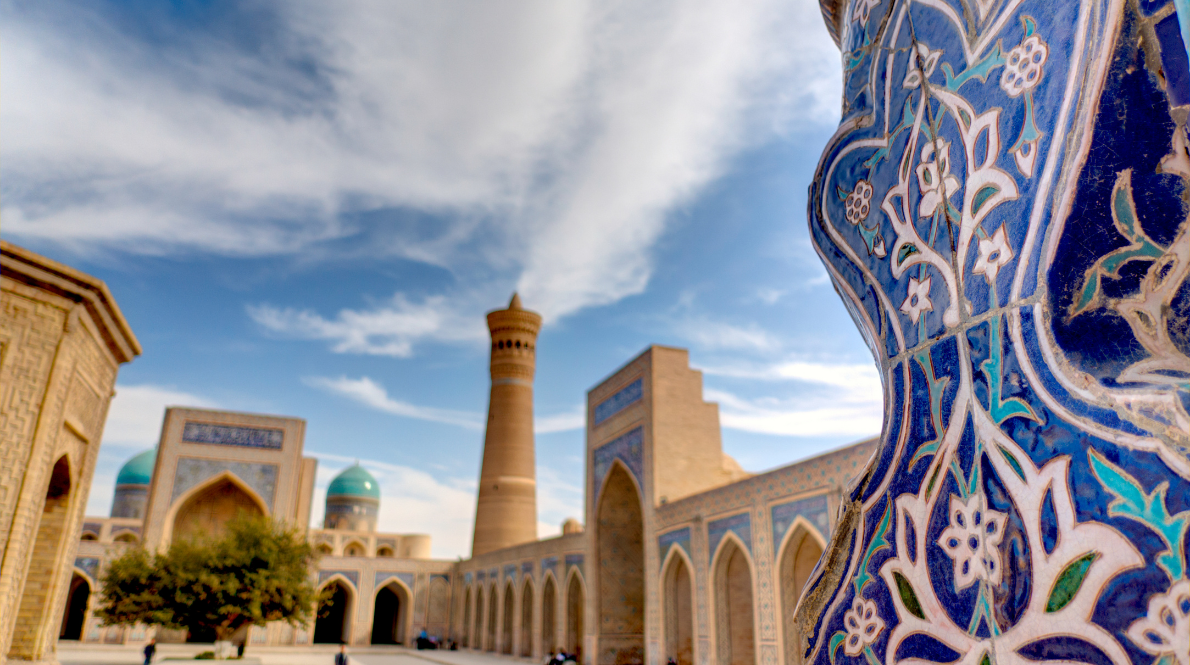 Kalon Mosque is the second part of the Poi Kalon complex. It is one of the oldest mosques in Central Asia and the second largest after the mosque in Samarkand. Archaeological excavations prove that a mosque was built here in the 8th century and was later destroyed by Chinggis Khan. The mosque you see today began to be built at the beginning of the 16th century — in 1514 — as written on the portal. The courtyard is rectangular. The prayer hall has 288 domes resting on 218 columns.
Mir Arab Madrasa
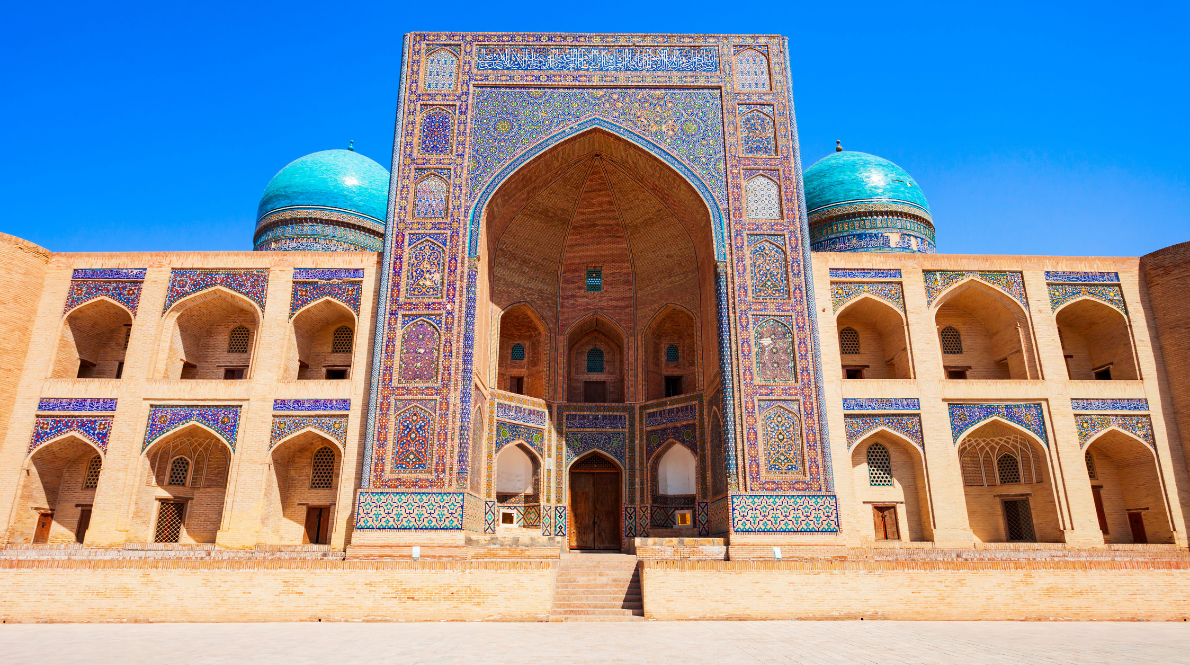 The Mir Arab Madrasa is the third part of the Poi Kalon complex. It became one of the most famous madrasas in the Islamic world after Al-Azhar in Cairo. It was built in 1535–1536 by order of Ubaydullokhan, the founder of the Bukhara Khanate. The madrasa was erected in honor of the Sufi and spiritual teacher Abdulla Yomaniy. Abdulla Yomaniy led an uprising against Persian invaders. Locals call him Miri Arab (“Prince of the Arabs”). Inside there are 114 cells, corresponding to the number of surahs in the Qur’an. In Soviet times, it was the only active madrasa in the former USSR. Many famous muftis from the East studied here.
Ark Citadel
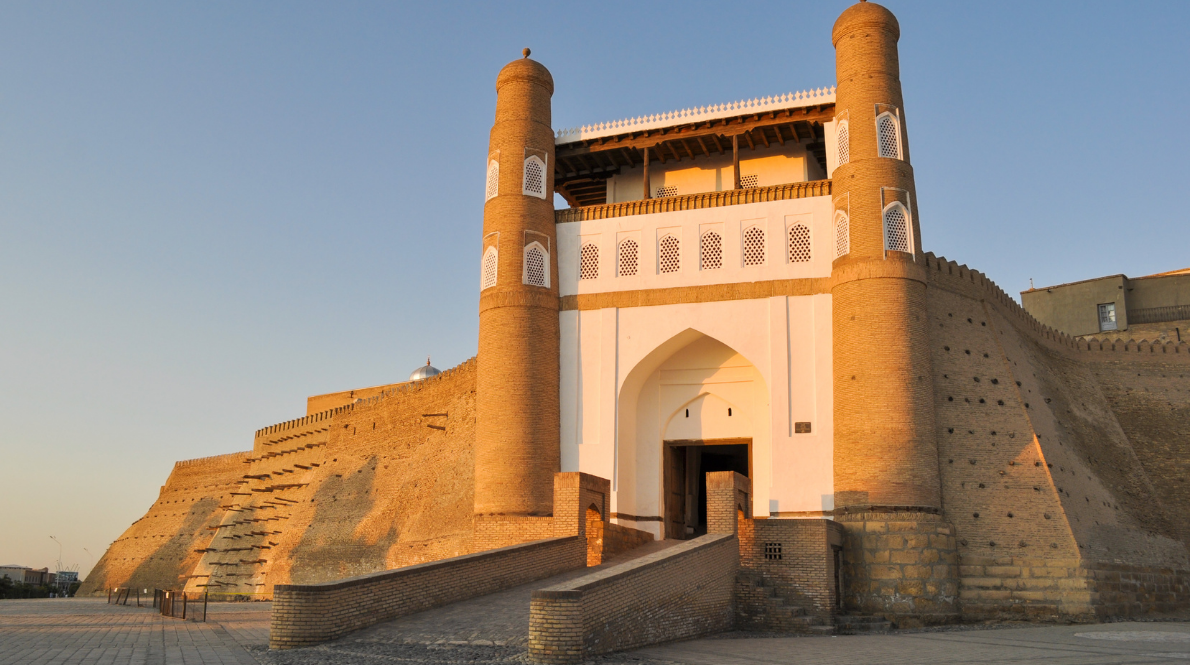 Ark Citadel is a massive and powerful fortress, used as a government residence from the 7th century until the Revolution of 1920, when the Bolsheviks overthrew the last Emir of Bukhara. He had to leave Bukhara and fled to Afghanistan, where he lived until 1944. According to legend from the famous Eastern epic < Shah Name >, the citadel was founded by Siyavush, the son of King Kaykavus. He moved to Bukhara and married the Bukhara princess Farangiz, daughter of King Afrasiyab. Wanting to leave something behind, he decided to build this fortress. Later his relationship with the king worsened and, by order of Afrasiyab, he was executed. The fortress served as a home for around 3,000 residents: women, children, concubines, the Emir’s mother, and relatives. Unfortunately, important parts of the fortress were destroyed during the Revolution.
Bolo Hauz Mosque
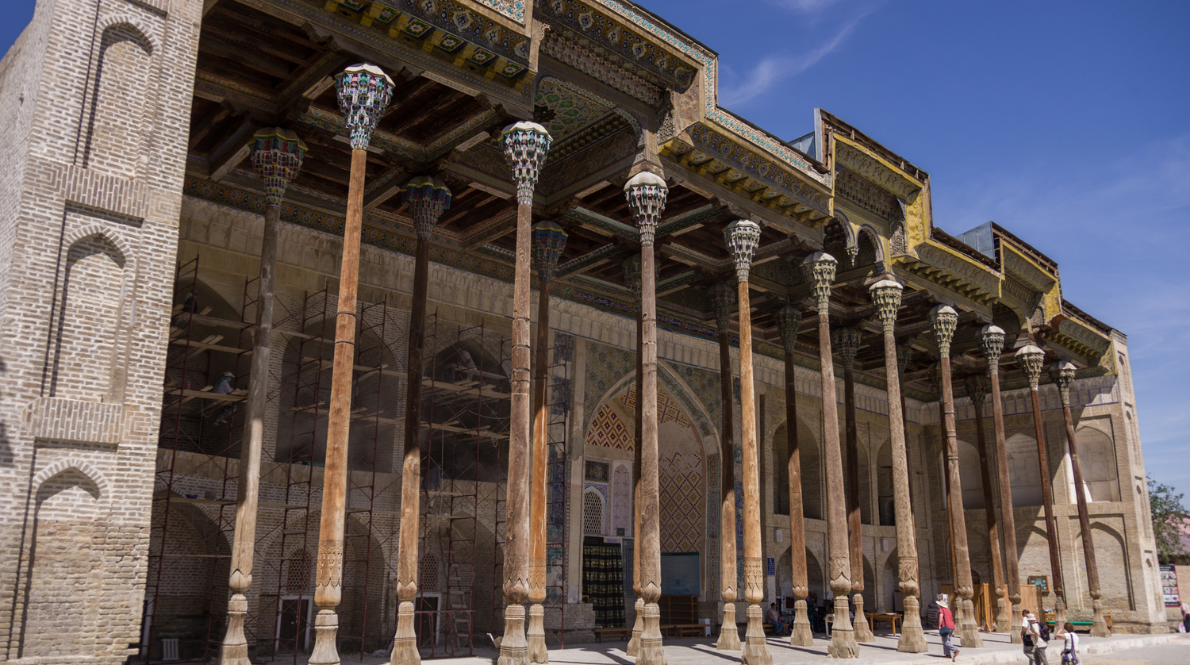 In front of the Ark fortress stands the Bolo Xauz complex with an 18th-century mosque. Its magnificent ayvan (veranda) is decorated with wooden columns, a wooden stalactite ceiling, and a hauz < pond > similar to Labi Hauz. The name Bolo Hauz means < Mosque by the Upper Pond >. The mosque is decorated with 20 wooden columns and was built in 1712. It was the main mosque of the city, and even the Emir of Bukhara attended Friday prayers here. This tradition of praying together with the people began during the reign of Shahmurat, a famous Sufi master of that time. The mosque is still active, and the administration of Bukhara’s Muslims is located here.
Ismail Samani Mausoleum
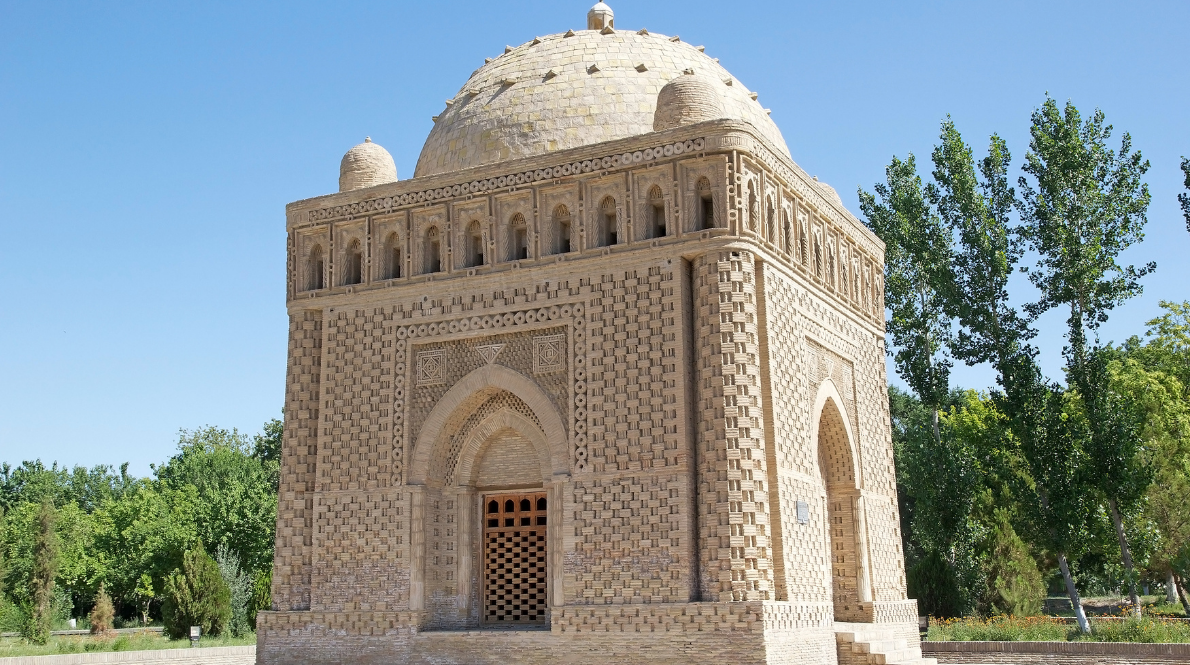 Inside the central park named after Ismail Samani is a unique and oldest historical monument — the mausoleum of the Samanid dynasty (9th century). It is the only surviving mausoleum of the Samanids and the first model of Islamic architecture in Central Asia. This dynasty was the first local Islamic dynasty that became independent after the Arab invasion. The architectural concept of the mausoleum relates to the Zoroastrian temple type. The Samanid period (9th–10th centuries) is considered Bukhara’s golden age — a time of revival in Central Asia. Many scholars and writers lived and worked then, such as Ibn Sina (Avicenna), born near Bukhara; Beruniy, who created an early model of the globe; and Rudaki, the famous Persian poet.
Chaschmai Ayub Mausoleum
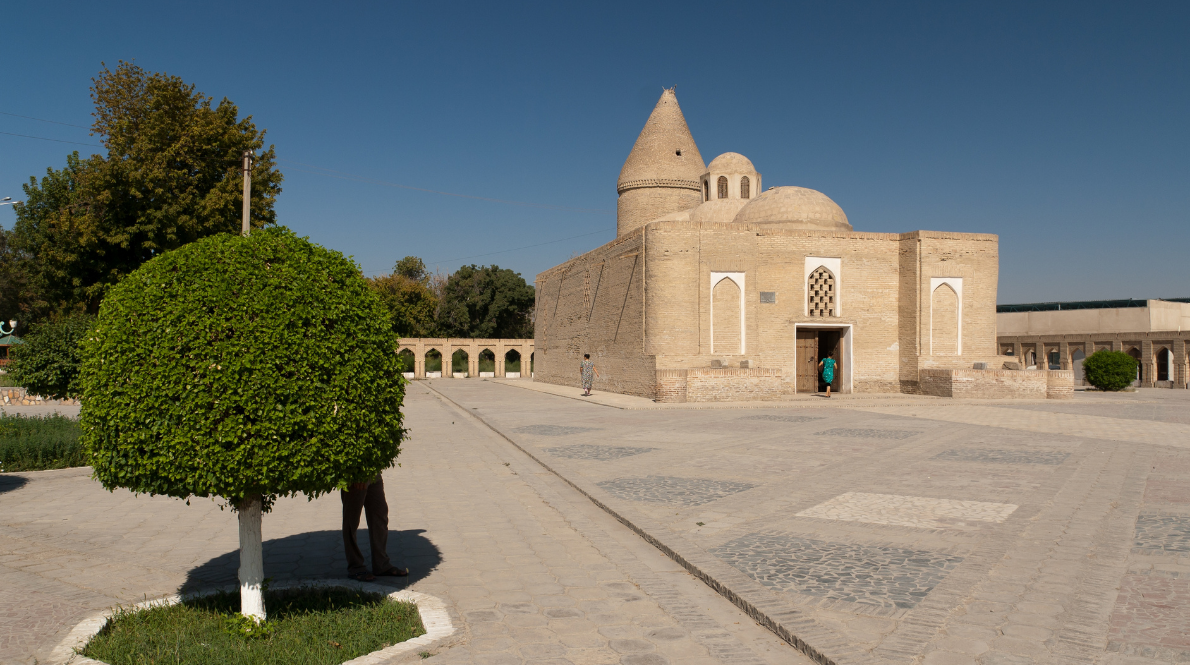 Chaschmai Ayub means “Job’s Spring” — the name of this historic mausoleum. According to legend, locals suffered from drought and prayed for water. The holy Job came to Bukhara and struck the ground three times with his staff, and a sacred spring appeared. The main part is covered with a conical dome — the most ancient section. It was built by order of Temur. Temur used Khorezmian captives to build this symbolic mausoleum; the conical dome shows the Khorezm architectural style. The construction was completed in the 16th century. Today the mausoleum contains the spring and a museum dedicated to water distribution in Central Asia.
Mausoleum of Saifutdin Bucharziy
A famous representative of Sufism, Saifutdin Bucharziy (1190–1261), was a murid (disciple) of the renowned Najmiddin Kubro, founder of the Kubraviya Sufi brotherhood. Bucharziy developed his teacher’s doctrine in Bukhara. He became very famous and had great influence on the conversion of the Mongol khan of the Golden Horde — Berke — to Islam. The Mongol khan Buyan Kuli was his successor. A mausoleum and a khanaka were built over the Sufi master’s grave and served dervishes until the 18th century. Buyan Kuli was also buried in front of the mausoleum.
Ulugbek Madrasa
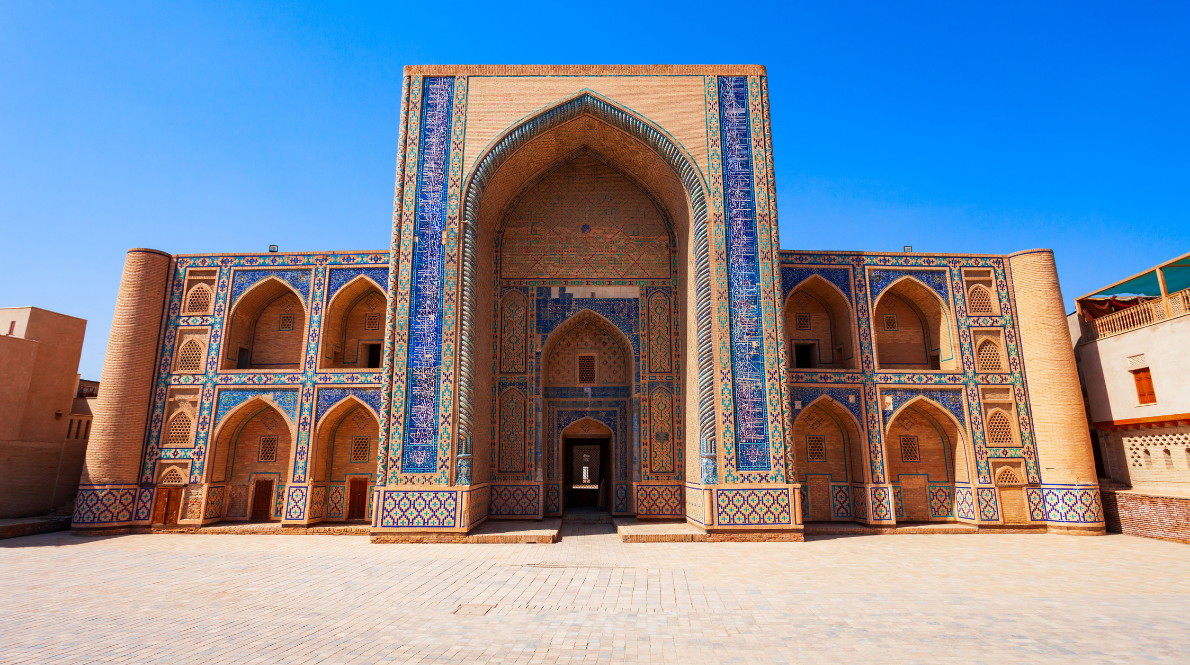 The first of three madrasas built by order of the famous astronomer and ruler Ulugbek, Temur’s grandson. He was a patron and paid great attention to the development of science and culture by building madrasas. The madrasa in Bukhara was built by the architects Najmiddin Buchari and Ismail Isfahaniy in 1417. There is an inscription at the entrance with the meaning: < Seeking knowledge is the duty of every Muslim man and Muslim woman >. This proves the importance of education during Ulugbek’s reign.
Chor – Minor Madrasa
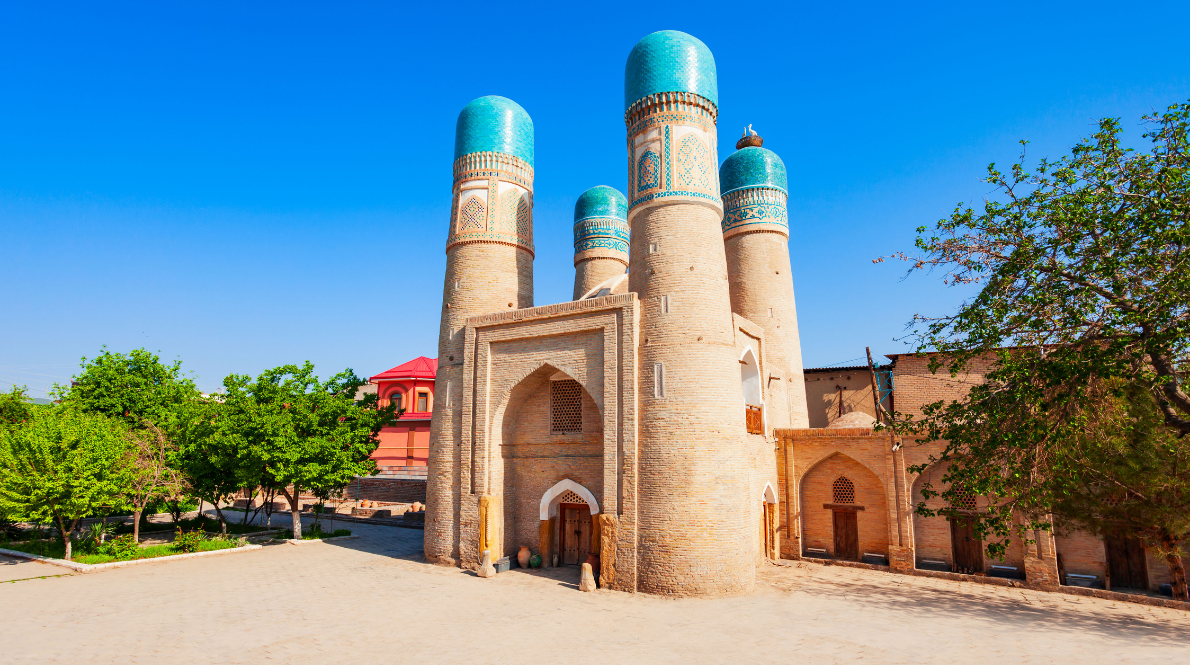 In the northeastern part of Bukhara, along narrow streets, you can find an unusual early-19th-century building — Chor Minor. Chor Minor means “Four Towers.” It is one of the best-preserved structures, financed by a wealthy Turkmen merchant, Kalif Niyazkul. The construction date is 1807. It is wrong to think that this building with four towers was used as a mosque, because the towers were never used for the call to prayer; they are simply decorative elements. Its extraordinary form impresses all tourists — hidden in a neighborhood not far from the central Labi Xauz complex.
Magoki Attori Mosque
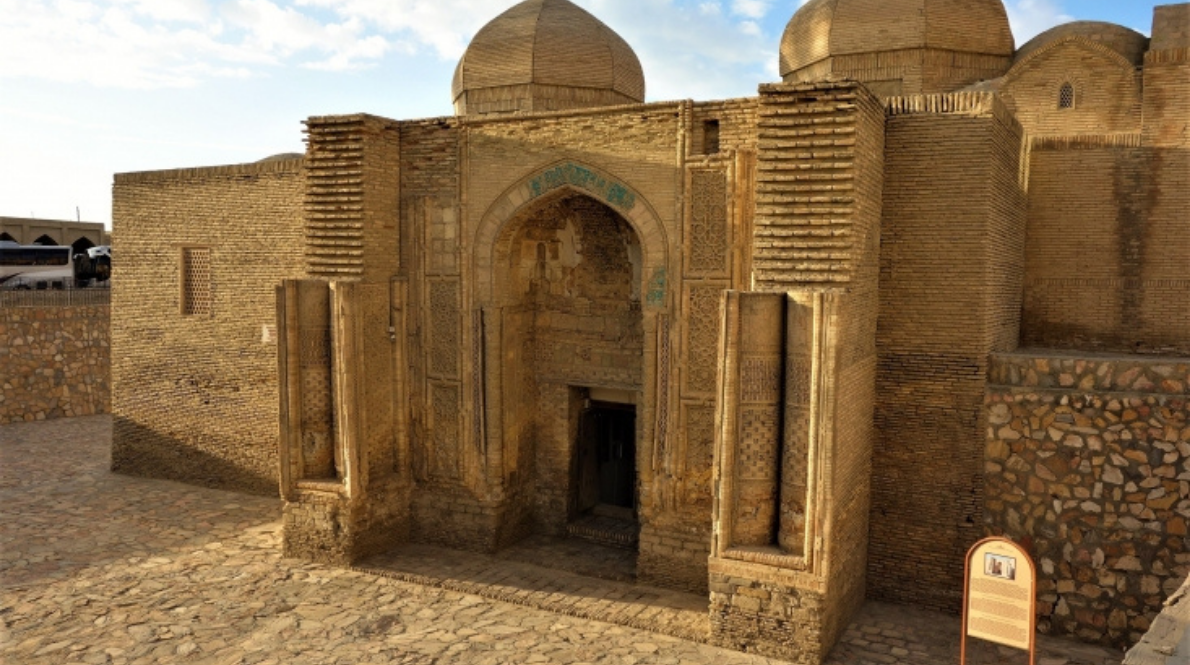 In the center of Bukhara there is a fascinating monument in the city’s history — Magoki Attori. The name means “mosque in the pit” or “herbal traders,” because a small bazaar for medicinal herbs (Attori) used to be here. The cultural layers of the building prove that Bukhara has always been a religious center. Magoki Attori was built on the foundations of a Zoroastrian temple. Researchers found remnants of a pagan altar there, likely used even before the Zoroastrian period. The ancient entrance portal was built in the 12th century, and it was renovated again in the 16th century. Just as Jews did not have the right to build their own synagogue, they gathered and prayed on specific days.
Trading Domes
In the 16th century, when the Uzbek Shaybanid dynasty conquered the territory of present-day Uzbekistan and chose Bukhara as the capital, the city became a major trade center. During this period they built trading domes, which became Bukhara’s special landmarks on the Silk Road. The reason for such commercial structures was that Bukhara was the capital of the Bukhara Khanate, and Silk Road caravans had to pass through Bukhara. The trading domes provided places where foreign merchants paid taxes to trade in Central Asia. The Toqi Sarrafon dome is linked to the word sarraf, meaning money changer — a place where foreign merchants exchanged currency for local money. You could say it was the first exchange point in the East. Toqi Telpakfurushon (Cap-Makers’ Dome) stands at a crossroads where five streets meet. Its first name was Kitab Furushon (Booksellers), because it was a book market; later it changed to Telpak Furushon when sellers began offering men’s, women’s, and children’s hats. The Tim Abdullakhan dome, not far from Telpak Furushon, was built in 1577. A special feature is its unusual lighting system through small windows and slits in the dome. Toqi Zargaron (Jewelers’ Dome) is one of the largest domes in Bukhara, named after the 36 jewelry shops inside. It was built in 1569–1570 and was the first trading dome in the new capital.
Chor Bakr Necropolis
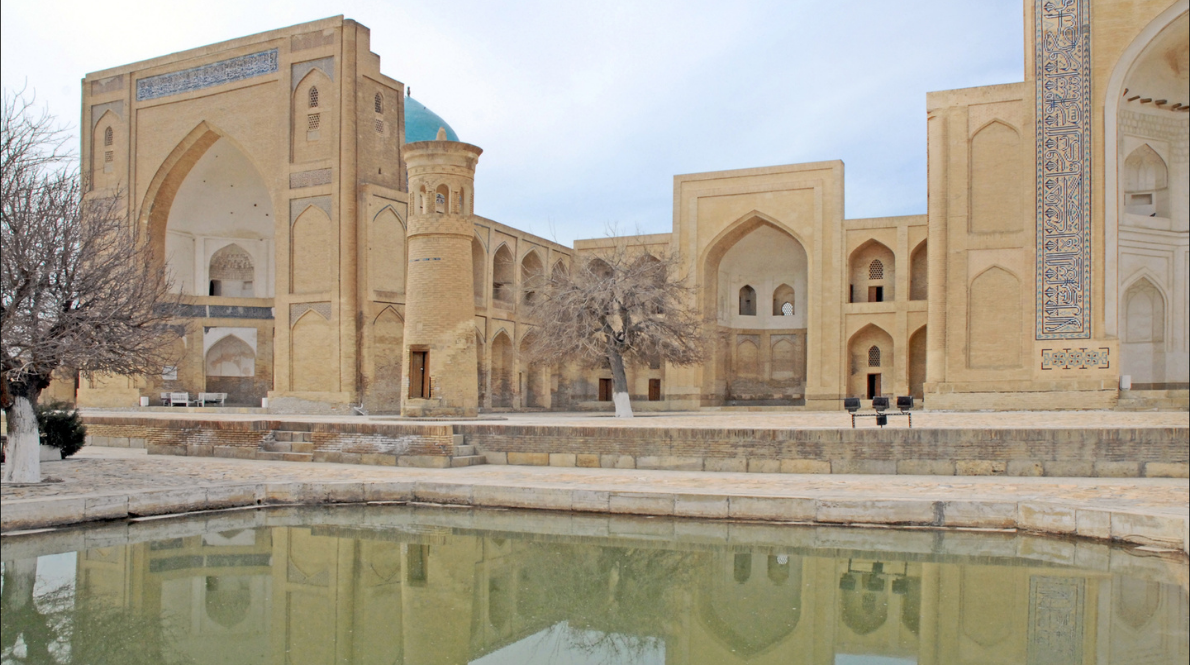 If you go 8 km west of Bukhara, you reach the village of Sumitan — the center of the Sufi dervish order Xodjagan. The main attraction is the Chor Bakr necropolis, famous as the < City of the Dead >, included on the UNESCO World Heritage list. The first structures appeared in the 10th century during the Samanids, but the main buildings were constructed during the period of the Juybari sheikhs who held the most important posts in government. The key shrine is the grave of Abu Bakr Saad, considered a descendant of the Prophet Muhammad and ancestor of the Juybari sayyids. The name Chor Bakr means < Four Bakr > and is linked to four brothers, though only two of them are buried there. More than 30 buildings are located within the complex.
The Ancient City of Varaxsha
Varaxsha is the ancient capital of the Bukharkhudats who ruled in Bukhara before the Arab invasion. According to Narshakhi, this city is even older than Bukhara. Varaxsha was the residence of rulers. The city had 12 irrigation canals, and every 15 days a large bazaar was held, because a branch of the Silk Road passed through Varaxsha. The last bazaar of the year lasted 20 days and was called the New Year, because locals counted their year from the end of this bazaar. The ancient complex dates to the 6th–8th centuries and was completely destroyed by the Arab army at the beginning of the 8th century. It is a great route for tourists who enjoy archaeological travel.
Xanaka Xodja Zaynuddin
Among the houses on the street of the same name lies a hidden pearl of Bukhara. The Xodja Zaynuddin complex was built at the beginning of the 16th century next to one of Bukhara’s oldest xauz (ponds). The Xodja Zaynuddin mosque belongs to the architectural type “xanaka–mosque.” The large hall was used by Sufis for ceremonies of chamber singing accompanied by musical instruments. The combination of mosque and xanaka symbolizes the practical unity of Islam and Sufism, typical of the late medieval period. Such complexes usually had several rooms for different functions (mosque, xanaka, mausoleum, and cemetery). The main shrine is the grave of the famous Sufi master Xodja Zaynuddin, known as < Xodji Turk >. His symbolic tombstone lies in the outer niche of the complex.
Khanaka Fayzabat
In the northeast of Bukhara’s center is the Fayzabat xanaka-mosque, built in 1598–1599 by the famous Sufi master Mavlono Poyondo Muhammad Axsi (Axsiketi) Fayzobodi, who died two years later in 1601. The building had two functions: a mosque (with a niche indicating the direction of Mecca) and a three-story xanaka with cells where dervishes lived. Earlier it was called Shoxi-Axsi, named in honor of its builder. The architects created a dynamic exterior structure for the complex.
Komlex Bahauddin Nakshbandiy
12 km from Bukhara, in the village of Kasri-Orifon (meaning “the fortress of those who recognize divine truth”), is the architectural complex of Bahauddin Naqshbandi. Bahauddin Naqshbandiy is revered as the spiritual patron of Bukhara and the founder of the Naqshbandiya Sufi brotherhood. He lived and was buried in his village of Kasri Orifon. His philosophy influenced many rulers and poets of the East; his teaching remains relevant today, and Bukhara is a holy place for many pilgrims from around the world. His philosophy can be summed up in the phrase << Dilba Yoru Dastba Kor >>, translated as << Let the heart remember Allah, and let the hands work >>. The symbol of this Sufi order is a heart with the inscription (Allah) inside. When he was young, he was a weaver and a master of gold embroidery on silk, from which the name Naqshbandiya is said to come.
In 1544, Abdulazizkhan built a marble enclosure around his grave. Not far from it, Abdulazizkhan also built one of the largest xanakahs for pilgrim dervishes in Central Asia, astonishing for its special dome system. This complex also includes the Muzaffarxana mosque (19th century) — the only women’s mosque from the 19th century — and the necropolis where you can see the graves of Bukhara’s rulers. It is one of the most important pilgrimage sites and a center of Sufism in Central Asia.
Masters of Sufism in Bukhara
Twelve major representatives (a chain of Sufi masters) of the Naqshbandiya order are buried in the territory of Uzbekistan, and 7 of them are in Bukhara.
Abduhalik Gijduvaniy
Hazrat Abduhalik Gijduvaniy was the founder of the Sufi brotherhood Xodjagan (“the five teachers”). He was born in 1118 in Gijduvan, 50 km from Bukhara. He was the first of four disciples of Yusuf Hammadaniy. Next to his grave is the Ulugbek Madrasa built in 1433, and a mosque for pilgrims who come to visit the mausoleum of the great Sufi master.
Arif Revgari
A murid (disciple) of Abduhalik Gijduvaniy, Arif Revgari was buried in the village of Revgar. There is an architectural complex with a domed mosque, a pond, a well with holy water, and Arif Revgari’s grave. He was known in Bukhara as < Moxi Tobon > (“bright moon”) because of his appearance. He was born in 1156, and after the death of his teacher Gijduvaniy he became the spiritual leader of the Xodjagan brotherhood.
Maxmud Anjir Fagnaviy
Xodja Maxmud Anjir Fagnaviy was born in 1196 in Vobkent. He was a disciple of Xodji Arif Revgari. There is a complex consisting of two mausoleums, a mosque, and a large garden — because Anjir Fagnaviy was a carpenter and gardener. It was an interesting tradition that Sufis in Central Asia knew a craft. Unlike his predecessors, who practiced silent zikr (Xufi), he practiced loud zikr (Djahriya).
Ali Romitaniy
He was famous in Bukhara as Xodja Azizon < Honored Sheikh >. He was born in 1195 in Romitan, 20 km from Bukhara, where he spent his whole life and worked as a weaver. He was a spiritual disciple of Anjir Fagnaviy. The Mongol khans ruling Central Asia converted to Islam thanks to his influence. His famous disciples were Xodja Bovardi, Xodja Muhammad Xalladj Balxi, and Xodja Muhammad as-Samasi. He died at the age of 126. There is an architectural complex around his mausoleum.
Muhammad Bobo as- Samasi
Not far from the mausoleum of Hazrat Ali Romitaniy, 15 km from Bukhara, is the grave of his disciple Bobo as-Samasi. He was born in 1259. He foretold the birth of Hazrat Bahauddin Naqshbandi when he passed through Naqshbandi village. He died in his village at the age of 95. Around his grave is an architectural complex with a mosque and garden visited by pilgrims.
Said Amir Kulal
Said Amir Kulal was a famous Sufi and mentor of Bahauddin Naqshbandiy. He was born in 1287 in the village of Suxkor, 11 km from Bukhara. This is a very large complex with a beautiful mausoleum and a big garden. The word Kulol means < potter >, because his craft was pottery. At the same time, he was a good wrestler; during a competition he met his teacher Hazrat Bobo Samasi. He is one of the famous Sufi masters, along with Mavlono Arif Diggaroniy, Xodji Djamal Dexaiy, Shamsuddin Kulol, Xodji Darzuniy, and Mavlono Djammaliddin Keshiy.
Women’s Sufi Monastery Kiz- Bibi
30 km from Bukhara is the architectural ensemble Kiz-Bibi. This unique Sufi center for women was built in the 18th century. The women’s Sufi xanaka includes three areas: the Kiz-Bibi cemetery with a marble gravestone, a mosque–xanaka, a chillaxana (underground room for forty days of prayer), a kitchen, a Turkish bath, and cells for pilgrims.
The Kiz-Bibi complex was built by the minister Miri Arab Sadikkhan in honor of Masturaxanum. She was a Sufi woman who disappeared into a cell of the xanaka. Locals believe her spirit still lives in the complex and helps newly married women who suffer from infertility, opening the way to family happiness. Female pilgrims come here from all over Uzbekistan and pray to God for a child. Men are not allowed to enter.